

Projects
Custom 10-inch rack-mount adapters for TP-Link ER605 and DrayTek PQ1070X
A network-hardware job where stock shelves and generic brackets were not enough — the rack size, device fit, airflow and front presentation all had to work together.
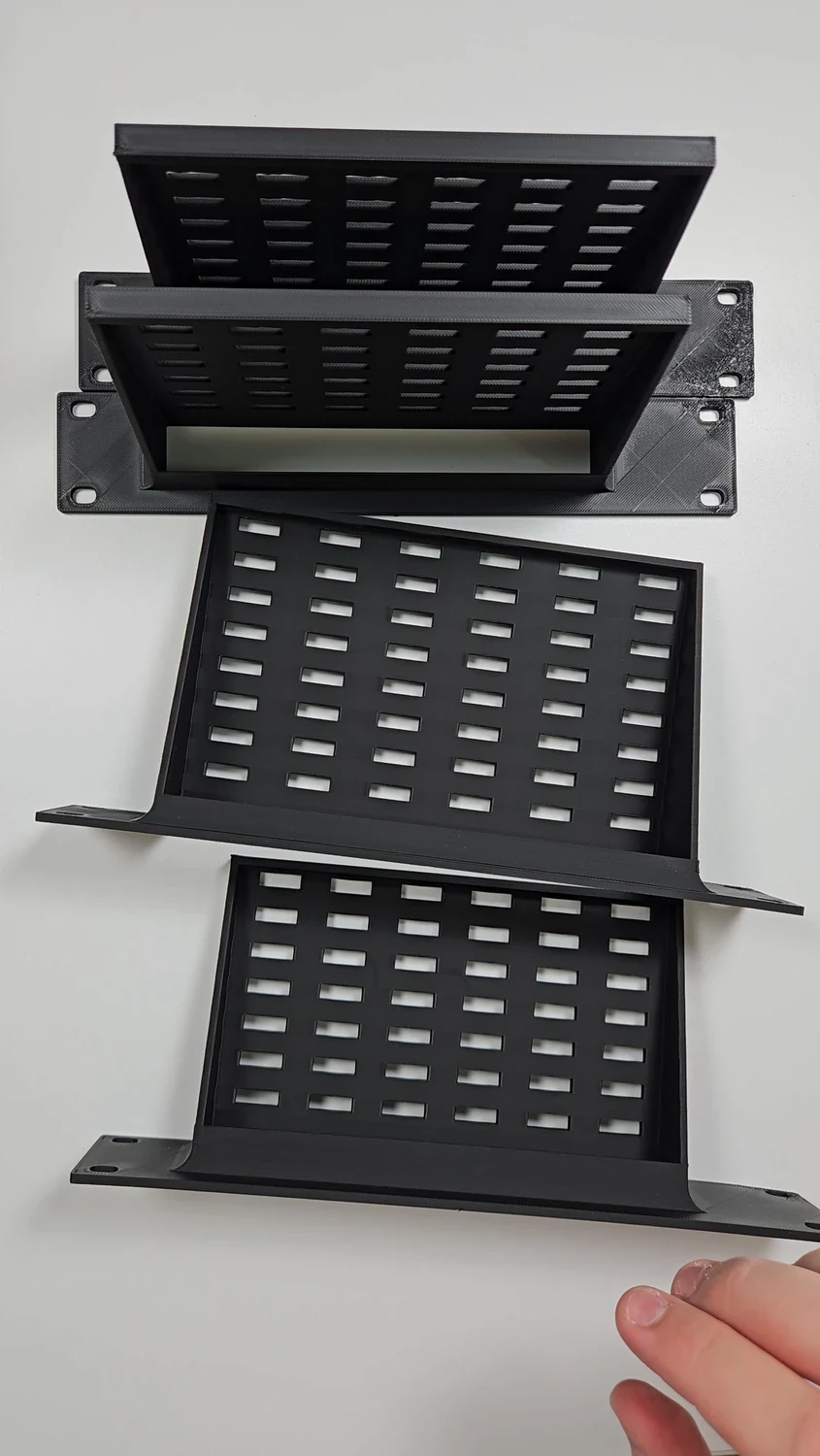
Project snapshot
| Item | Details |
|---|---|
| Process | FDM |
| Material | PLA |
| Application | 1U 10-inch rack-mount adapters |
| Devices | TP-Link ER605 and DrayTek PQ1070X |
| Quantity | 4 finished parts across 2 designs |
| Turnaround | ~2 days design/production + delivery |
| Price | £40 per pair / £80 total |
The brief
A client needed to install network equipment inside a SOHO 1U 10-inch rack, but no ready-made bracket matched both the rack and the specific devices involved. He supplied the key measurements for the rack opening and the network hardware, together with enough reference information to make the intended setup clear.
The project therefore became a true custom-fit job rather than a simple print-from-file request. I designed one adapter type for the TP-Link ER605 and another for the DrayTek PQ1070X, then produced two printed parts of each type.
Design approach
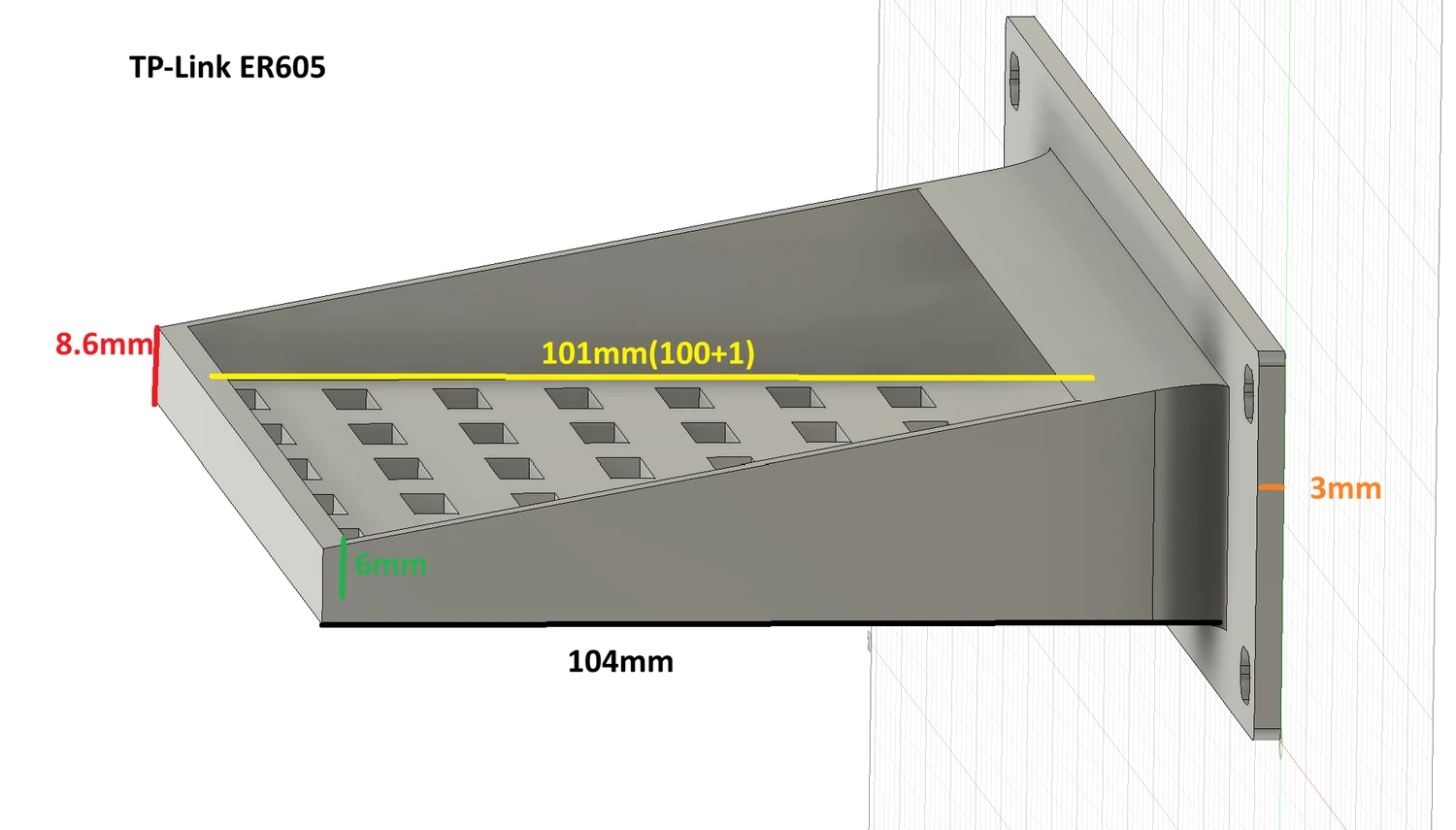
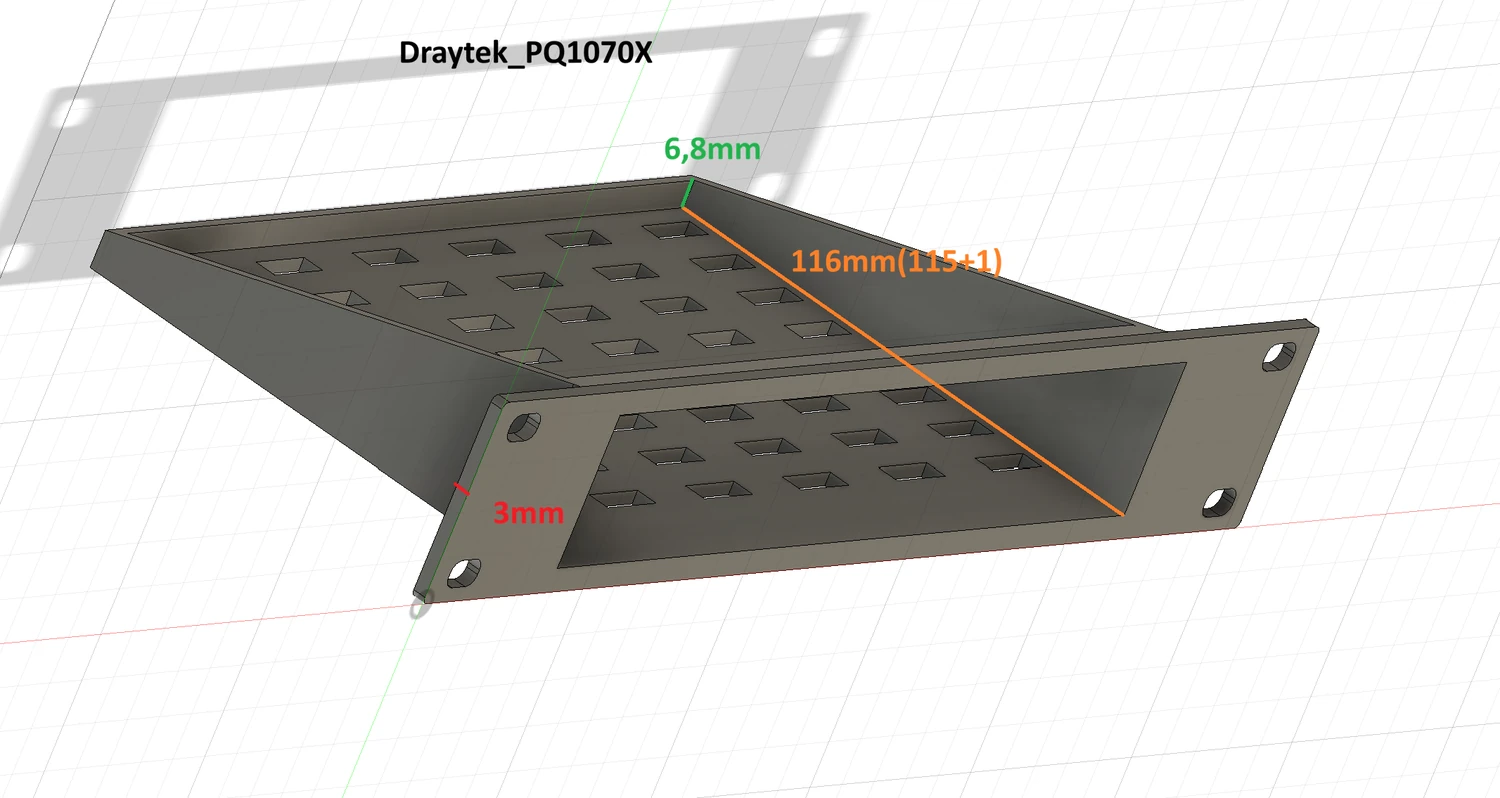
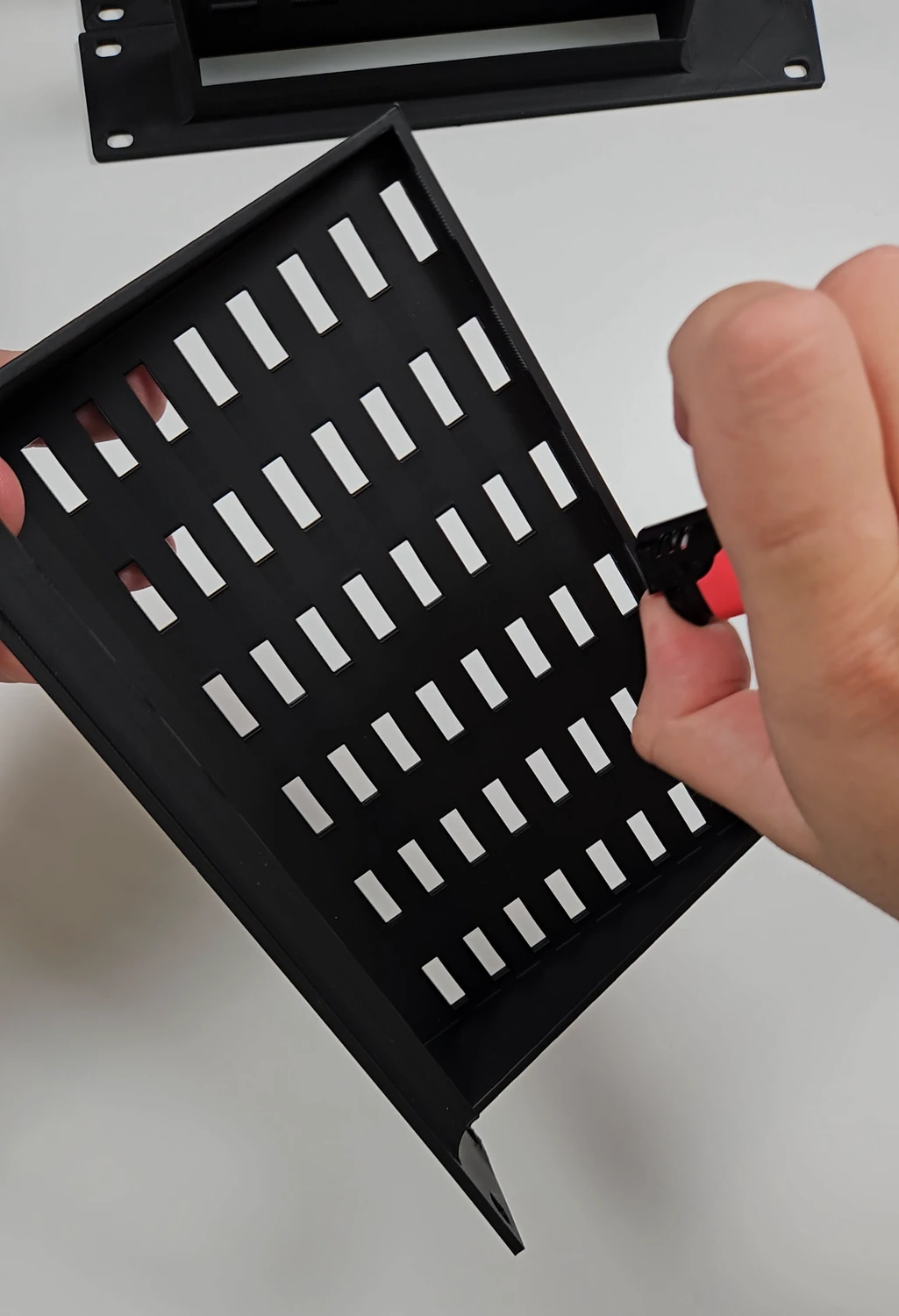
These were not just flat side brackets. The adapters were designed as proper fitted frames with a clean front appearance, ventilation cut-outs and a small rear stop that prevents the device sliding too far back while still leaving clearance for lower-positioned connectors such as RJ45 and power inputs.
Another key requirement was presentation inside the rack. The client wanted the devices to sit properly centred rather than resting low like they would on a generic shelf, so the geometry had to balance fit, airflow and visual alignment at the same time.
Material and production choices
PETG was discussed as an option, but after weighing cost, appearance and expected temperatures, the client chose PLA. In this case the equipment was not expected to run hot enough to justify the extra material cost, so PLA gave the better commercial balance.
The parts were printed with a 0.4 mm nozzle at 0.16 mm layer height. Although the original discussion mentioned a lower infill percentage, I ultimately printed the finished parts at 100% infill to increase strength and long-term durability without increasing the price.
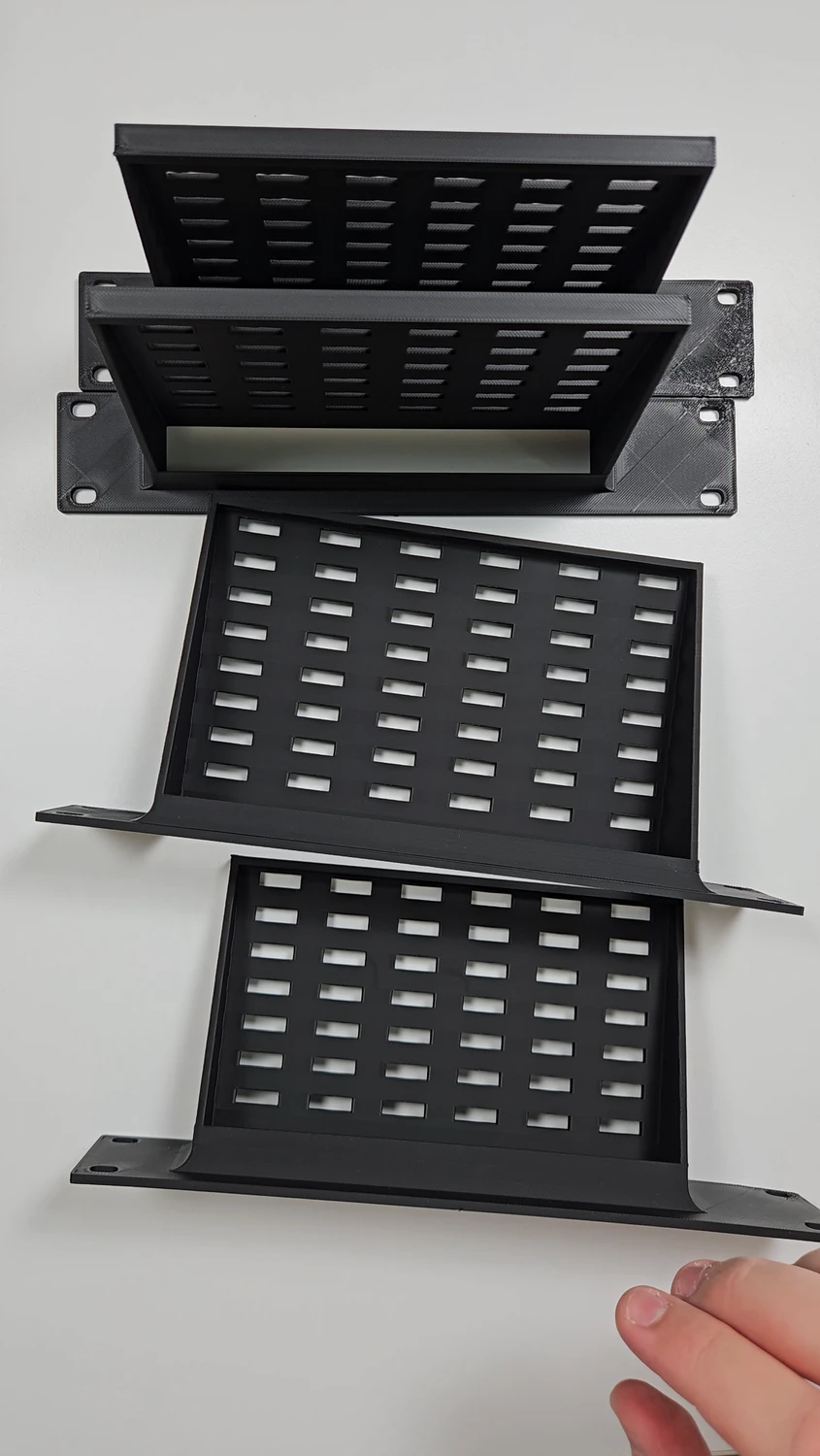
The print orientation was also chosen deliberately. Printing the parts vertically helped keep the visible front face cleaner, which mattered because these are customer-facing parts once installed in the rack.
Fit, finishing and dispatch
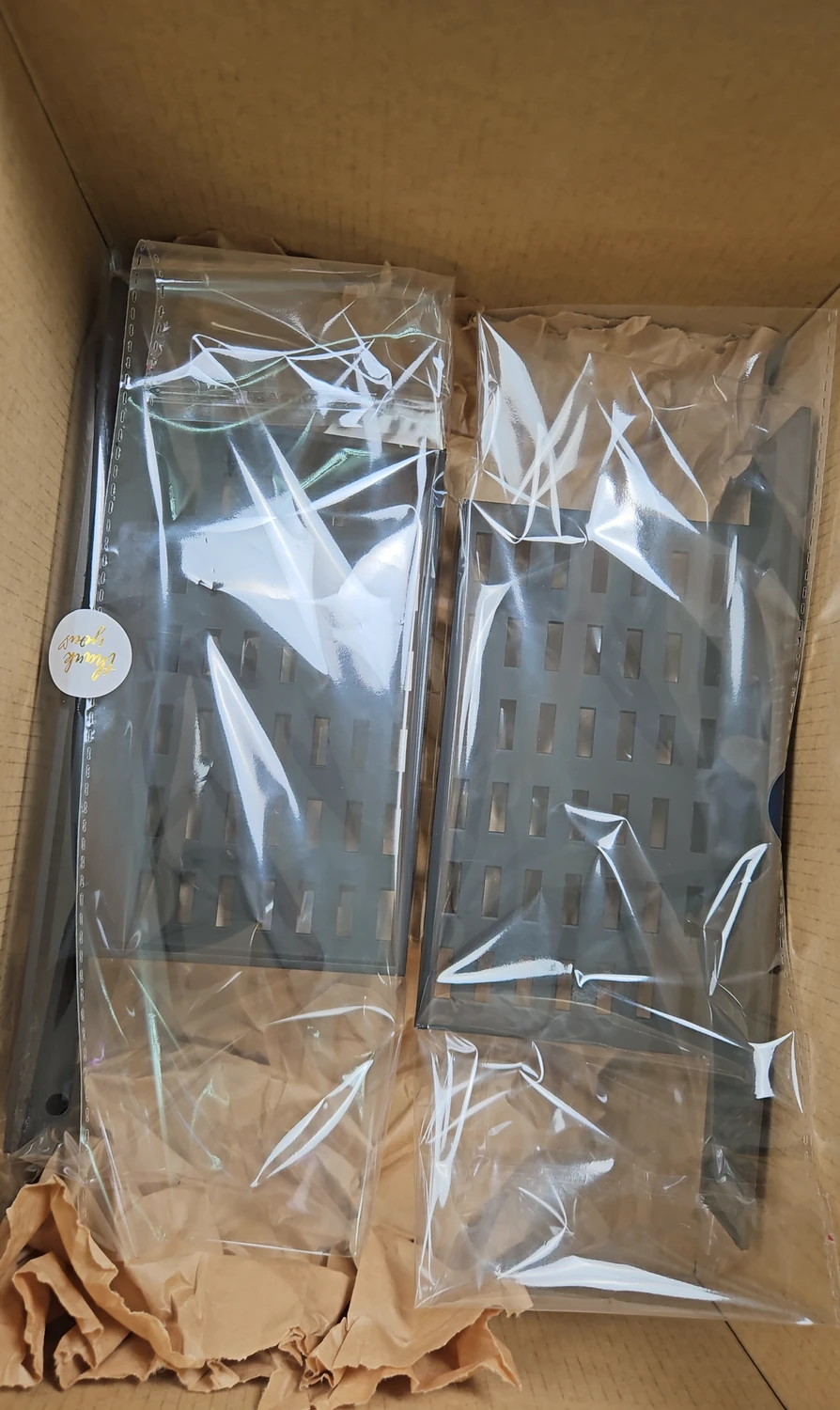
Minor cleanup was carried out after printing where needed, including light flame finishing to remove fine stringing. From there, the parts were packed securely for dispatch.
Result
The full order cost £80, with £40 per pair. Design and production took about 2 days, and the client received the parts shortly afterwards by standard delivery.
This project is a strong example of where custom 3D printing becomes genuinely useful: small quantity, device-specific fit, quick turnaround and no practical off-the-shelf alternative at a sensible price.
Related: FDM 3D Printing, PLA, 3D Design & File Support, Get a Quote.
Related
FDM 3D Printing
See build size, material choices and common functional use cases.
PLA
A clear guide to one of the most common FDM materials.
Projects & examples
Browse more real-world projects across FDM, resin and batch production.
Get a Quote
Send your file or brief for an exact price and lead time.
Ready to print?
Send your file (or your idea) and we’ll reply fast with options and a clear quote.