

Service
Small-Batch 3D Printing for Business
A practical route for pilot runs, repeat parts and short commercial batches — with sample approval, sensible lead times and options for packaging, finishing and quality checks where the job needs them.
What this service is for
This page explains the mechanics of low-volume production: when a job is a good fit for batch printing, how orders move from sample to repeat run, and what affects cost, lead time and consistency.
Ideal when you need tens or hundreds of parts, but not the tooling commitment of injection moulding.
Parts that benefit from flexible iteration, lower setup cost and realistic small-batch lead times.
The process is matched to strength, finish, unit cost, geometry and post-processing needs.
Confirmed against print time, quantity, finishing and packaging — with sample runs scheduled where useful.
When this service is the right route
- You need dozens or hundreds of parts rather than a single prototype or a tooling-scale production run.
- The design may still evolve, so keeping change flexibility matters more than squeezing unit cost to the absolute minimum.
- Speed matters and you want a production method that can start from files without mould tooling lead time.
- Branding, inserts, bagging or kitting are part of how the finished order needs to arrive.
When another route may be better
- Very high volumes where tooling-based manufacturing becomes the smarter economic choice.
- Strict certified production environments or compliance-heavy requirements outside the scope of studio manufacturing.
- Parts that demand injection-moulded cosmetics or metrology beyond a practical 3D printing workflow.
- Jobs that are still only sketches and need CAD work first — in that case start with 3D Design & File Support.
Batch workflow
Designed to make small-run production predictable without burying the job in process overhead.
Brief + files
Send the model, quantity, deadline and any notes about visible faces, fit, colour, packing or labels.
Spec + quote
We confirm the process, material, lead time and any agreed QC, finishing or packaging requirements before production.
Sample approval if needed
For larger or more sensitive runs, a first-article or pilot batch can confirm fit and finish before the full batch begins.
Batch, QC and dispatch
Parts are produced to the agreed setup, checked, packed and shipped — with repeat-order notes where applicable.
The main drivers of a batch quote
- Geometry and print time — especially support-heavy parts or models with many slow-to-print fine details.
- Material choice — everyday PLA/PETG differs from ASA, nylon or specialist resin options.
- Finishing and hardware — inserts, assembly, extra cleanup, sanding or painting all add labour.
- Packaging format — bulk packing is different from bagging, labels or kit-ready supply.
- QC depth — visual inspection is standard; measured checks or documentation are quoted to scope.
Extras that can be built into the order
- Heat-set inserts, supplied fasteners or simple assembly.
- Bagging, labels or kitting for easier internal handling or customer-facing packing.
- Colour splits and branded versions where the batch includes multiple variants.
- First-article samples before the main run, especially useful for fit-critical jobs.
- Measured checks on agreed features when the risk level justifies it.
Common batch job types
Typical scenarios where short-run 3D printing is often a better fit than either one-off prototyping or full production tooling.
Enclosures, brackets, fixtures and branded inserts
Good when you need practical parts, predictable output and lower setup cost. This is where most repeat FDM work sits.
Small precision parts, masters and display-ready pieces
Best when detail, crisp edges and surface finish matter more than large build volume or maximum throughput.
Short validation runs before a wider rollout
Useful for proving packaging fit, retail response, field performance or assembly behaviour before committing to a larger repeat order.
Repeat supply with spec notes carried forward
When a part comes back as Rev B or Rev C, the order can be tied to the confirmed version instead of restarting from scratch.
Need procurement-friendly ordering, invoices or repeat-order handling?
Those business-process details live on the dedicated 3D Printing for Business page. Use it when the bigger question is how your team will order, approve, reorder and document jobs over time.
Commercial examples
A few real jobs that match the kind of work this page is meant to attract.
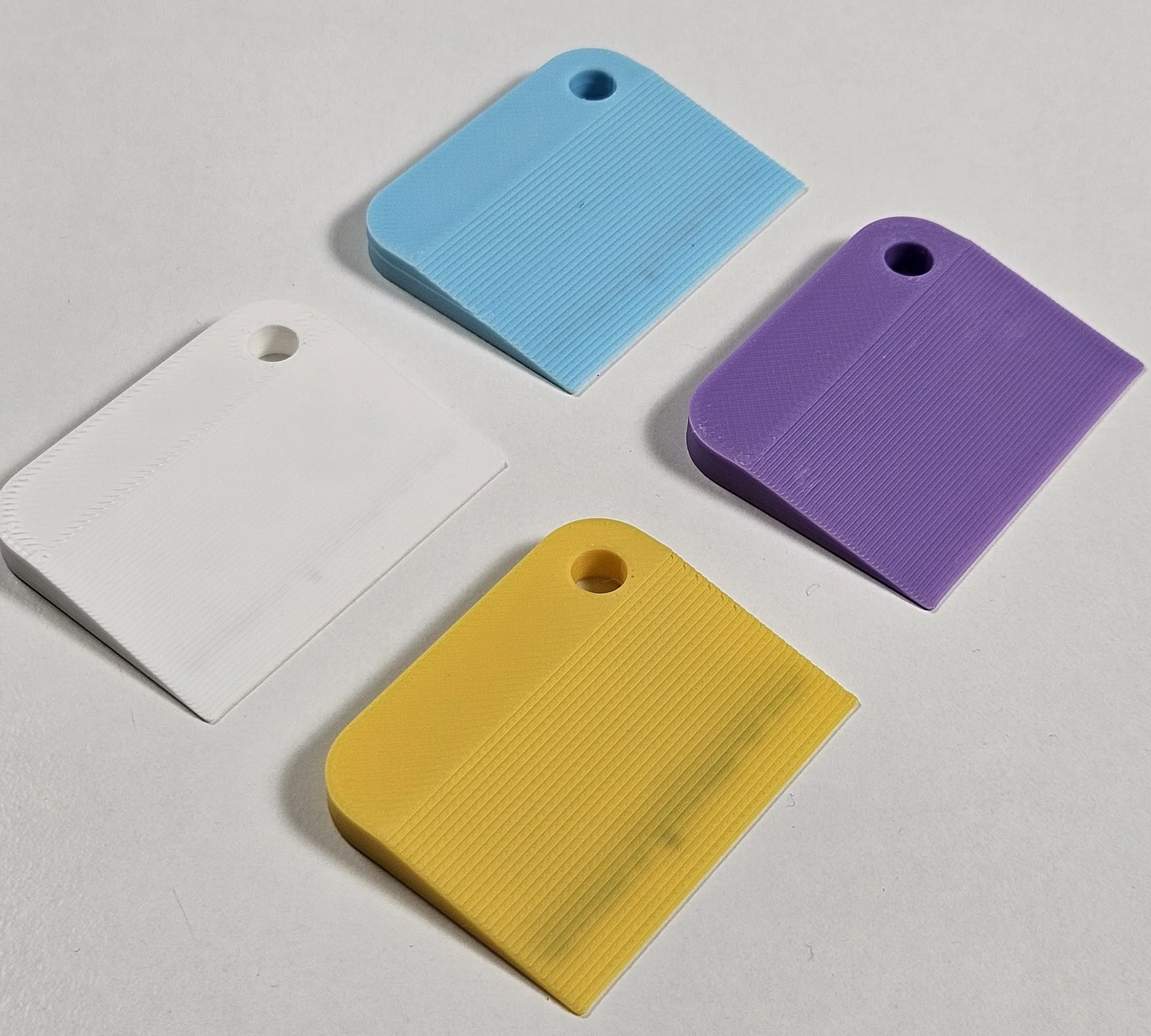
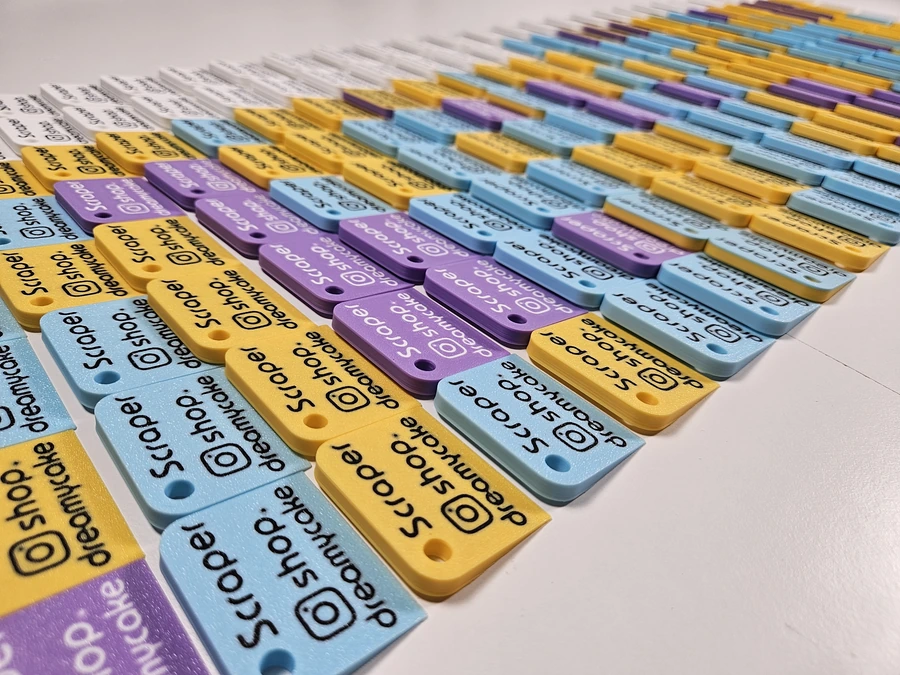
220 mini scrapers with integrated branding
A short-run product batch with multi-printer workflow, packing and presentation details built into the job.
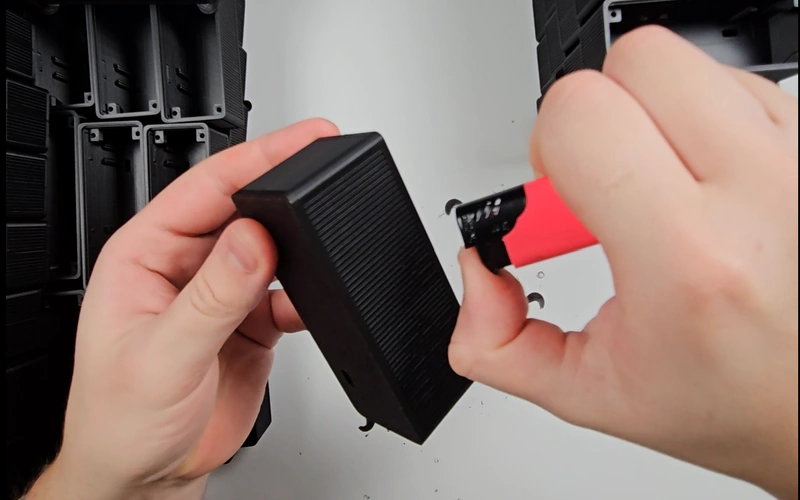
Hundreds of enclosure housings
A higher-volume business batch where material control, QC screening and packing discipline mattered more than novelty.
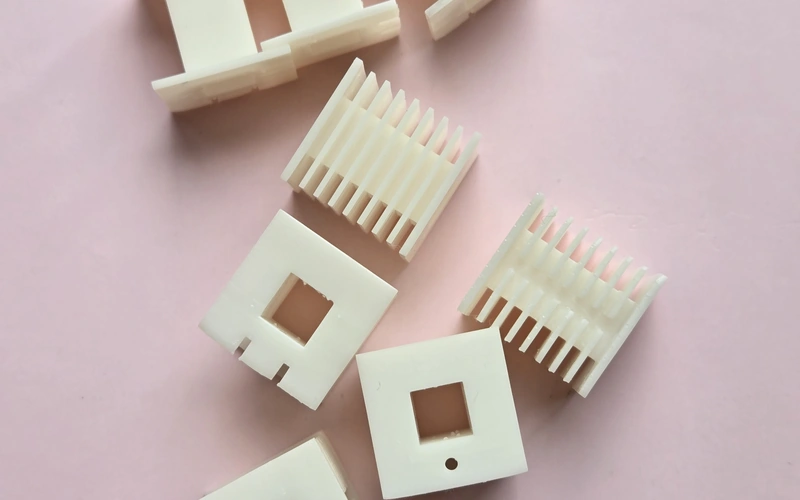
Resin coil bobbins and small functional parts
A good example of when repeatable small-part resin work is a better fit than larger-format FDM.
What to send for a batch enquiry
- Files plus notes on what must not change.
- Quantity and whether the order is a pilot run or likely repeat supply.
- Deadline and any milestones that affect shipping or launch timing.
- Material / finish priorities or the real use case if you need guidance.
- Packaging requirements such as bulk, bagging, labels or kits.
- Critical dimensions or features that may need measured checks.
What usually changes delivery speed
- Part count and print time per part set the baseline production window.
- Supports, finishing and inserts add labour after printing.
- Sample approval loops are often worth the extra time if the batch is high-risk.
- Colour sourcing or specialist materials can add procurement time when not already in stock.
Small orders are often quicker; larger batches typically sit in the 3–7 business day range once the full scope is confirmed.
Batch & Commercial Orders FAQ
Short answers for the production questions that usually come up first.
What quantities count as a batch order?
There is no hard minimum. Many batch jobs are in the tens to low hundreds of parts, though the practical range depends on part size, print time, material and finishing.
Can you make a sample before the full batch?
Yes. A first-article or pilot run can be arranged before the main batch when the fit, finish or function needs to be confirmed first.
Can parts be bagged, labelled or supplied as kits?
Yes. Bagging, labels, simple kitting and certain assembly steps can be quoted when agreed before production.
What affects batch pricing the most?
Geometry, material, print time, support removal, finishing, inserts or assembly, packaging requirements and the depth of QC all affect price.
Where do invoices, PO workflows and repeat-order handling live?
Those commercial workflow details are covered on the 3D Printing for Business page, which is the best reference for procurement-friendly ordering and repeat-supply processes.
Ready to print?
Send your file (or your idea) and we’ll reply fast with options and a clear quote.