

Projects
Custom 74 mm intake flow straightener in ASA
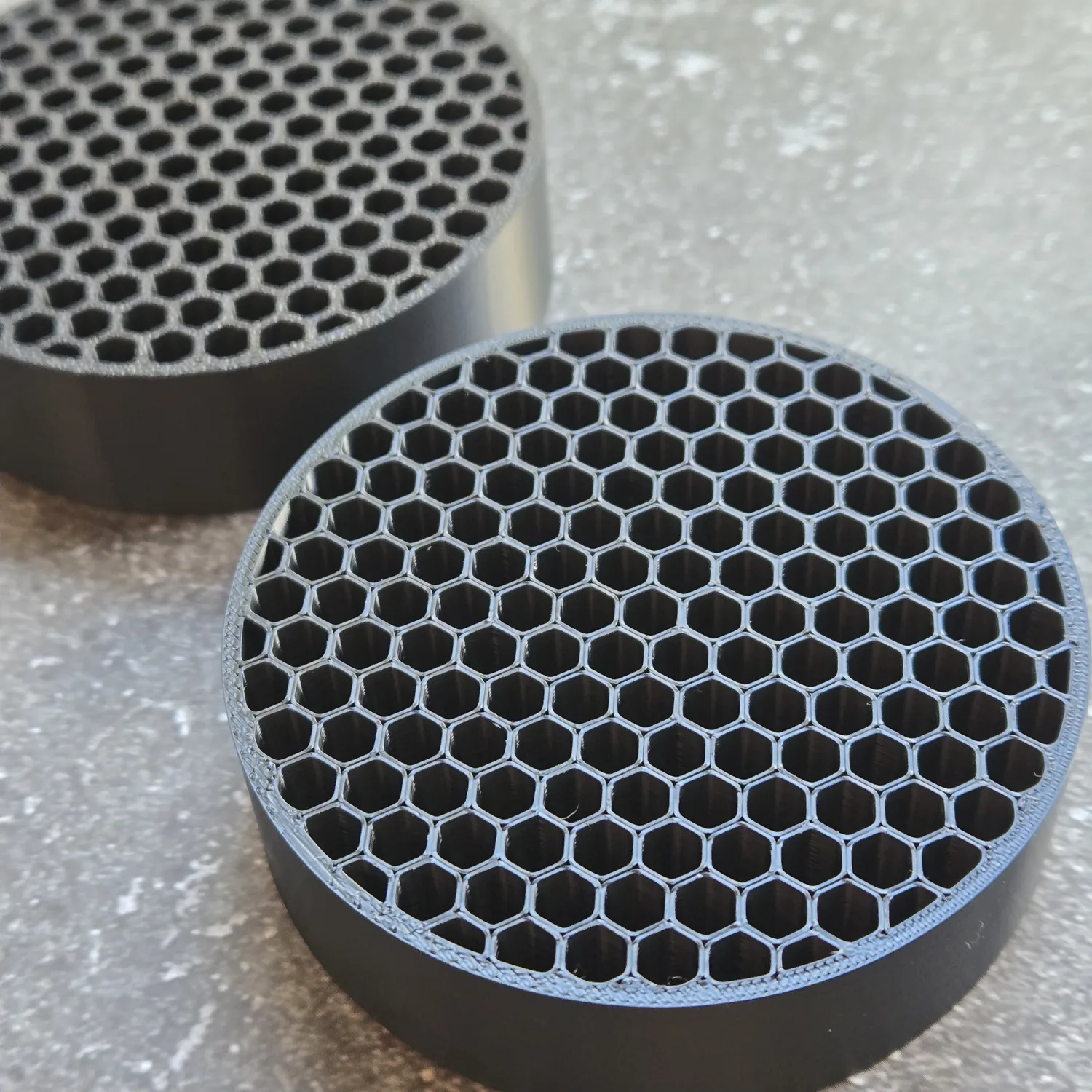
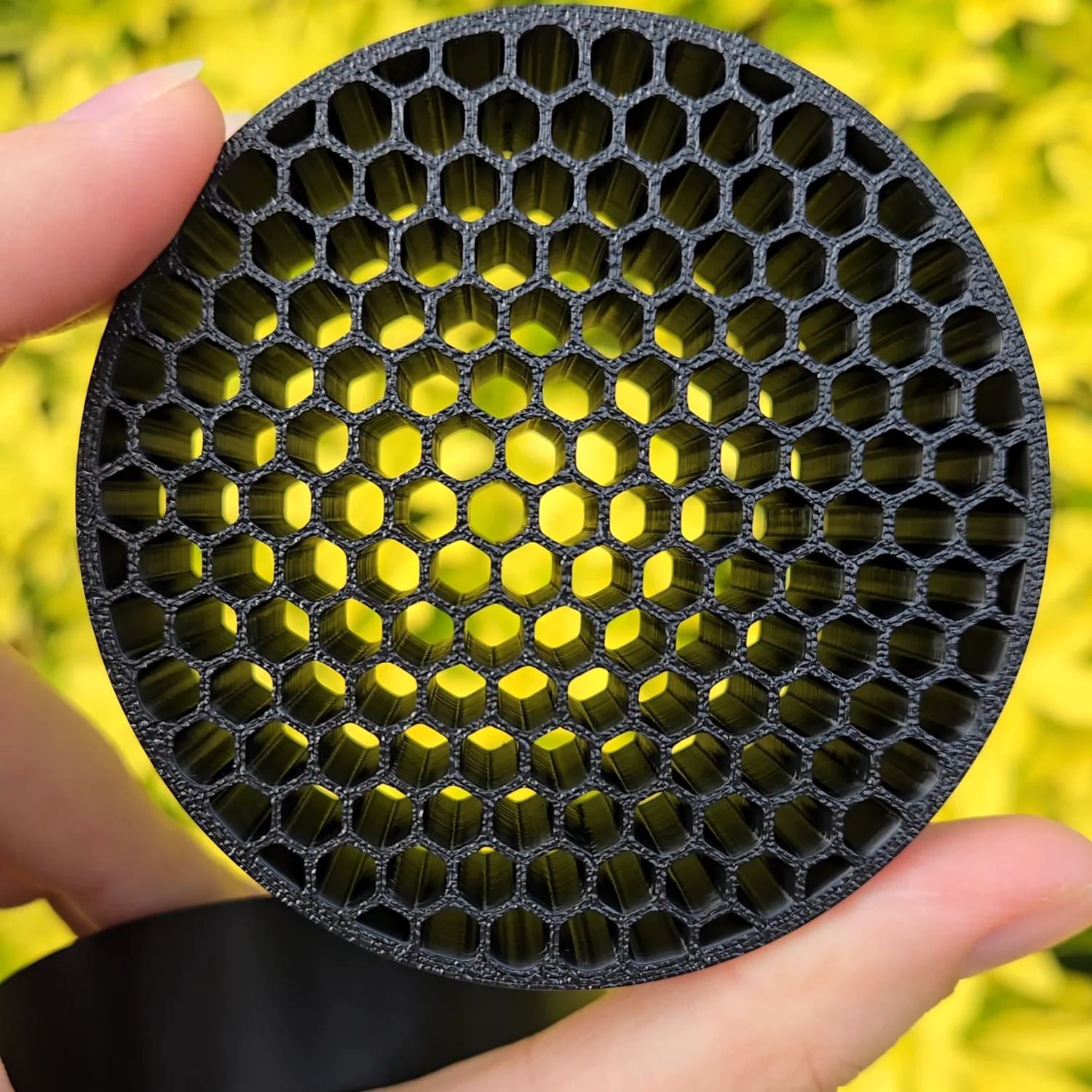
A small automotive part where material choice, dimensional accuracy and repeatable honeycomb geometry mattered more than visual styling.
Project snapshot
| Item | Details |
|---|---|
| Process | FDM |
| Material | Black ASA |
| Part type | Honeycomb intake flow straightener / airflow insert |
| Diameter | 74 mm |
| Quantity | 2 pieces |
| CAD work | Fully modelled from client measurements |
| QC | Multi-point caliper checks |
| Price | £35 for the pair |
The brief
A client needed a custom flow straightener for an automotive intake application. The required part was a cylindrical insert with a honeycomb internal structure and a specific outer diameter. The client supplied the key measurements, and I developed the full CAD model from scratch around those dimensions.
Why the material choice mattered
This was not a decorative part. Even though it is compact, it still belongs in an environment where temperature, humidity, UV exposure and general automotive conditions are more demanding than a normal indoor setting.
For that reason, we chose black ASA rather than a simpler material such as PLA. ASA offers better heat resistance, environmental durability and long-term stability, which makes it much more suitable for this type of application.
Design and production
1) Custom CAD around a 74 mm fit
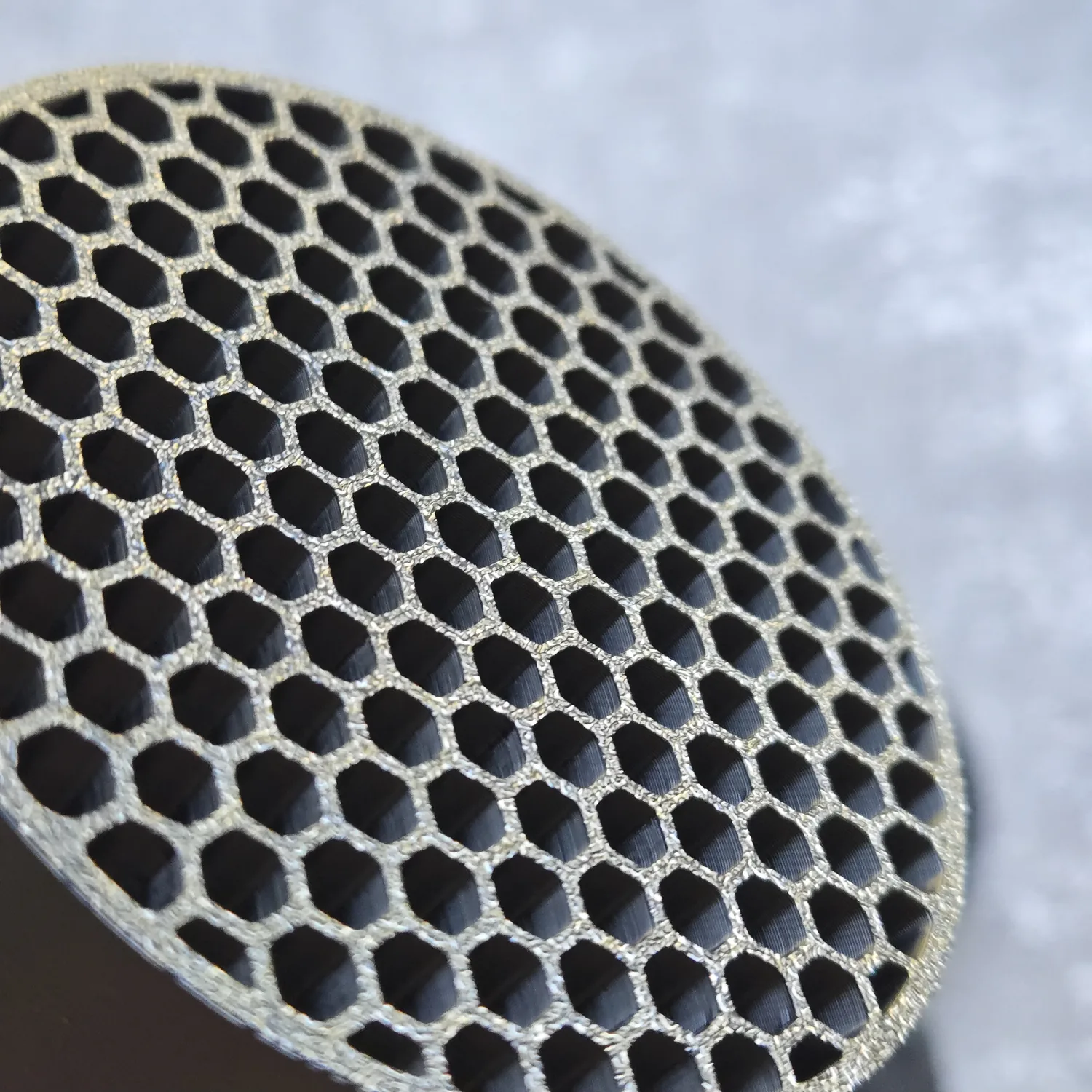
The part was designed around a 74 mm diameter, with the wall thickness, depth and honeycomb cell size adjusted to the client’s requirements. Because fit was important, the modelling work focused on accurate proportions and consistent wall geometry rather than decorative features.
2) FDM printing in ASA
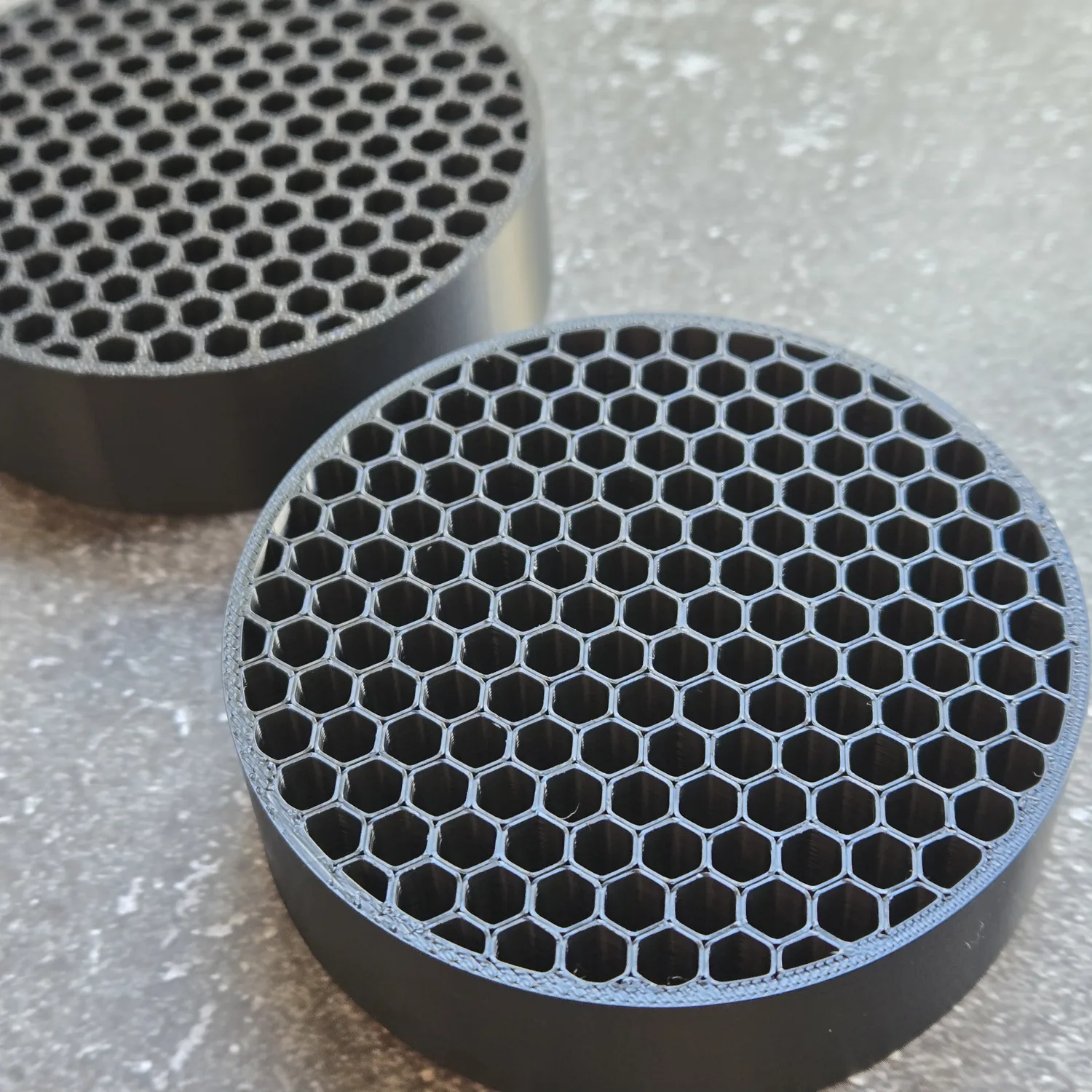
After approval of the CAD model, the parts were produced using FDM printing in black ASA. The material delivered the right balance of stiffness, dimensional stability and environmental resistance for the intended use.
3) Precision verification after printing
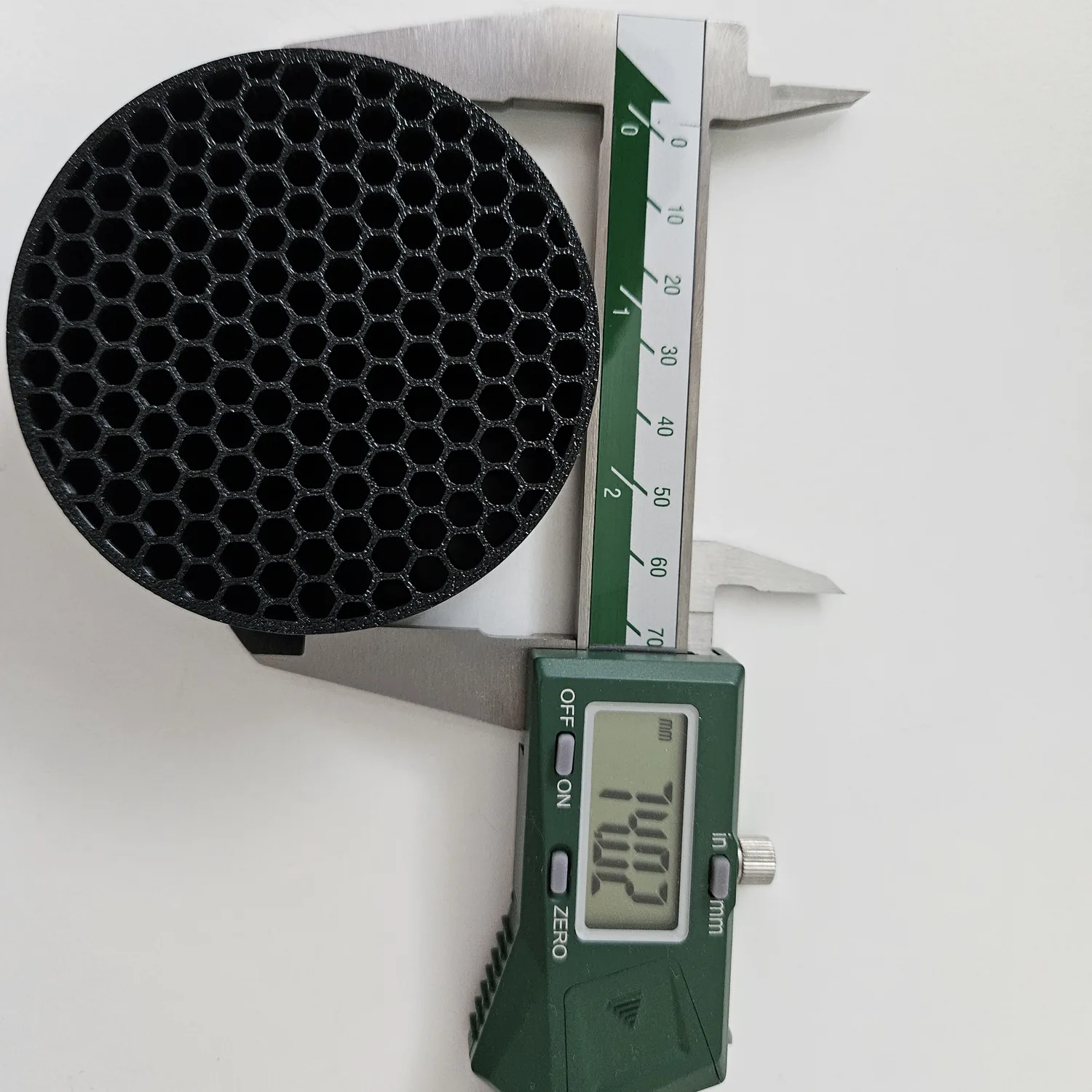
Once printed, the finished pieces were checked using a precision digital caliper. Measurements were taken in several positions to confirm the diameter and ensure the parts stayed within tolerance.
The final deviation was kept within approximately ±0.03 mm, which was important for a part intended to fit a real client-specified diameter rather than a generic test model.
Result
Two flow straighteners were produced for a total of £35. The finished parts show clean honeycomb geometry, accurate sizing and a material choice suitable for a demanding automotive environment.
This project is a strong example of how FDM printing can be used for small technical inserts, custom automotive components and low-volume functional parts, especially when the job starts from a client’s measurements rather than an existing file.
Related: FDM 3D Printing, ASA, 3D Design & File Support, Get a Quote.
Related
Ready to print?
Send your file (or your idea) and we’ll reply fast with options and a clear quote.