

Projects
Ryobi ONE+ battery removal aid for smaller hands
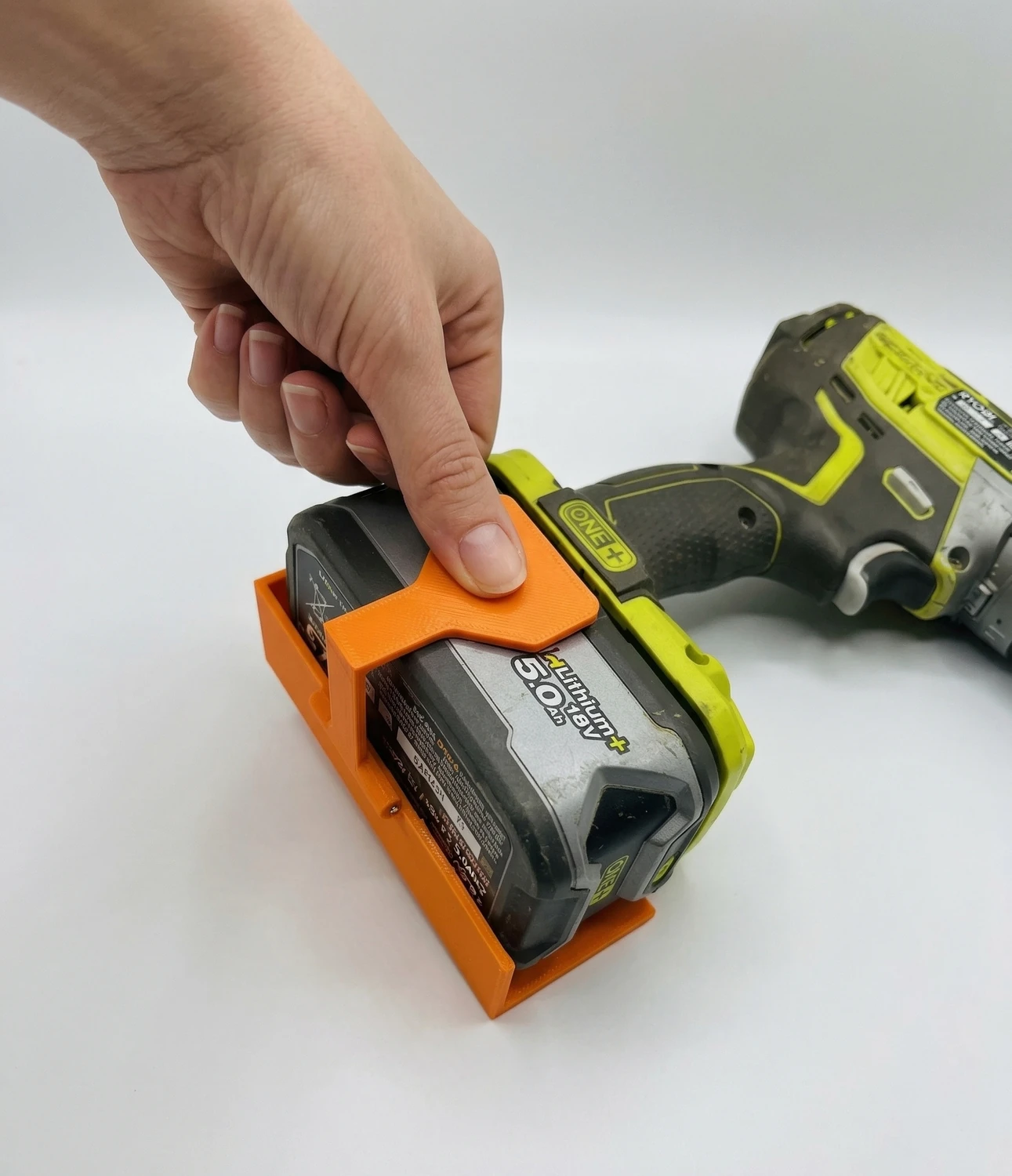
A tiny but useful project: take a niche ergonomic problem, print the parts, finish them properly and send the client a ready-to-use tool.
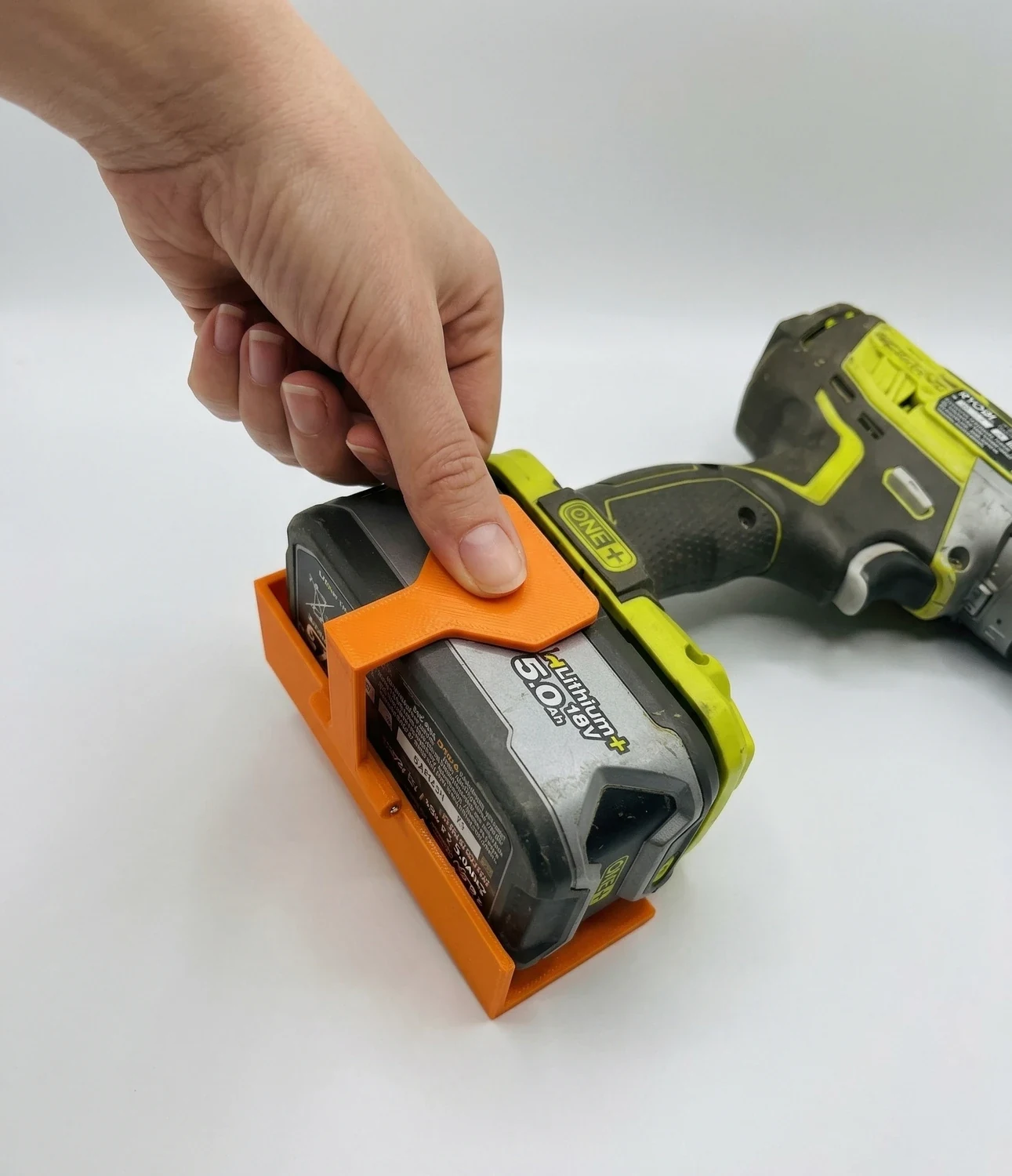
Project snapshot
| Item | Details |
|---|---|
| Process | FDM |
| Material | PLA |
| Product type | Hinged battery removal aid |
| Platform | Ryobi ONE+ |
| Colour | Orange |
| Assembly | Fully assembled before dispatch |
| Price | £12 |
The brief
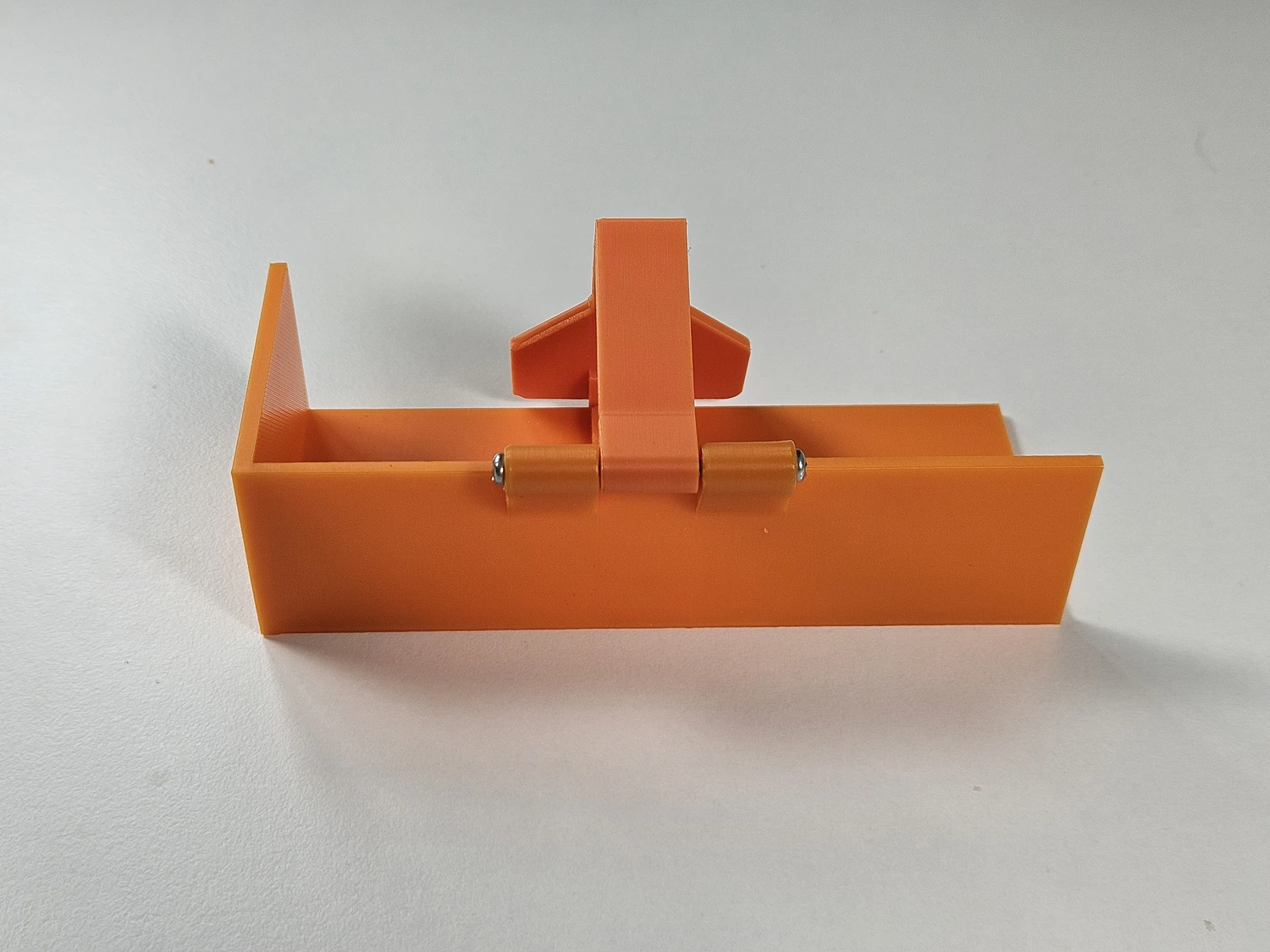
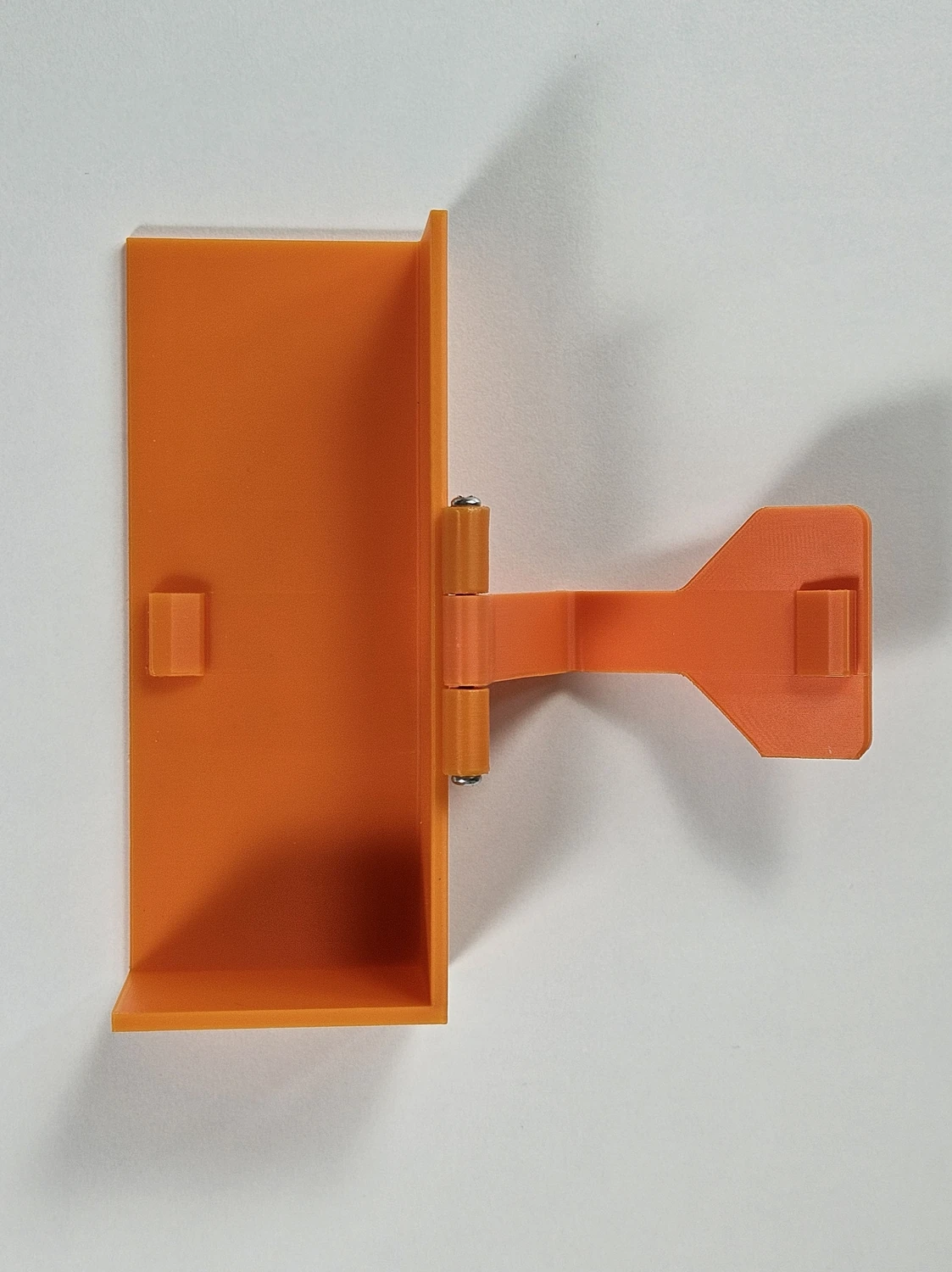
The client already had a 3D model for a small tool designed to make Ryobi ONE+ batteries easier to remove, especially for users with smaller hands. The design consisted of two printed parts joined by a central pivot, creating a simple mechanical aid rather than just a decorative accessory.
After discussing material and colour, the client chose orange PLA. Green was considered to match the Ryobi colour family more closely, but orange gave a clearer visual contrast and was the preferred final choice.
Why 3D printing was the right fit
This is exactly the kind of product where 3D printing makes commercial sense. The problem is real, but it is also niche. It is unlikely that a large manufacturer would create and distribute an official accessory for such a specific ergonomic need.
With a printable digital model and a small-batch production workflow, that niche problem becomes practical to solve. The client does not need their own printer, does not need to source parts, and does not need to deal with support removal or assembly.
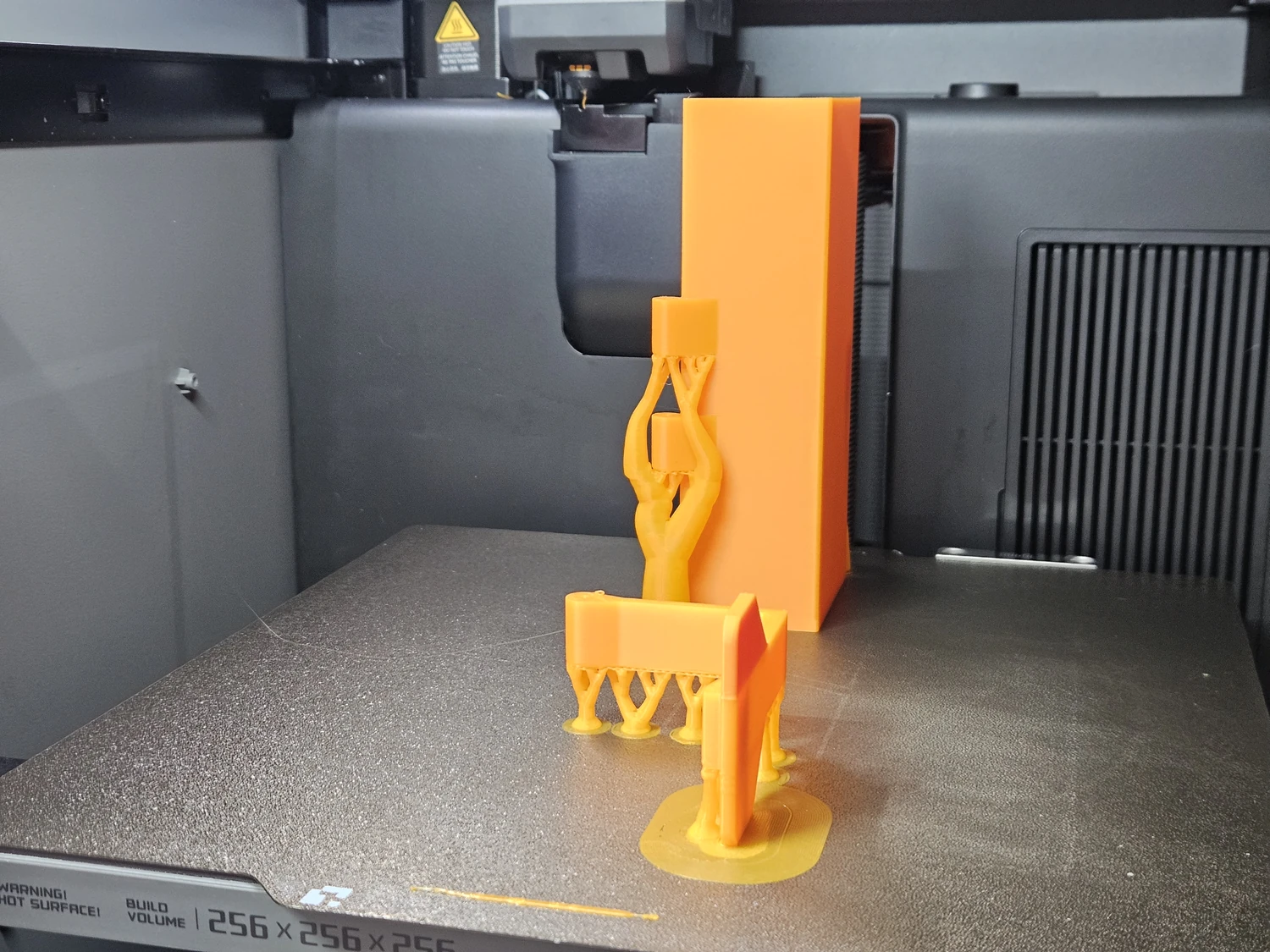
Printing, cleanup and assembly
The two parts were printed separately with supports where needed, then cleaned after printing. Supports were removed, edges were tidied, and minor stringing was cleared away so the tool looked more like a finished product and less like a raw print straight off the machine.
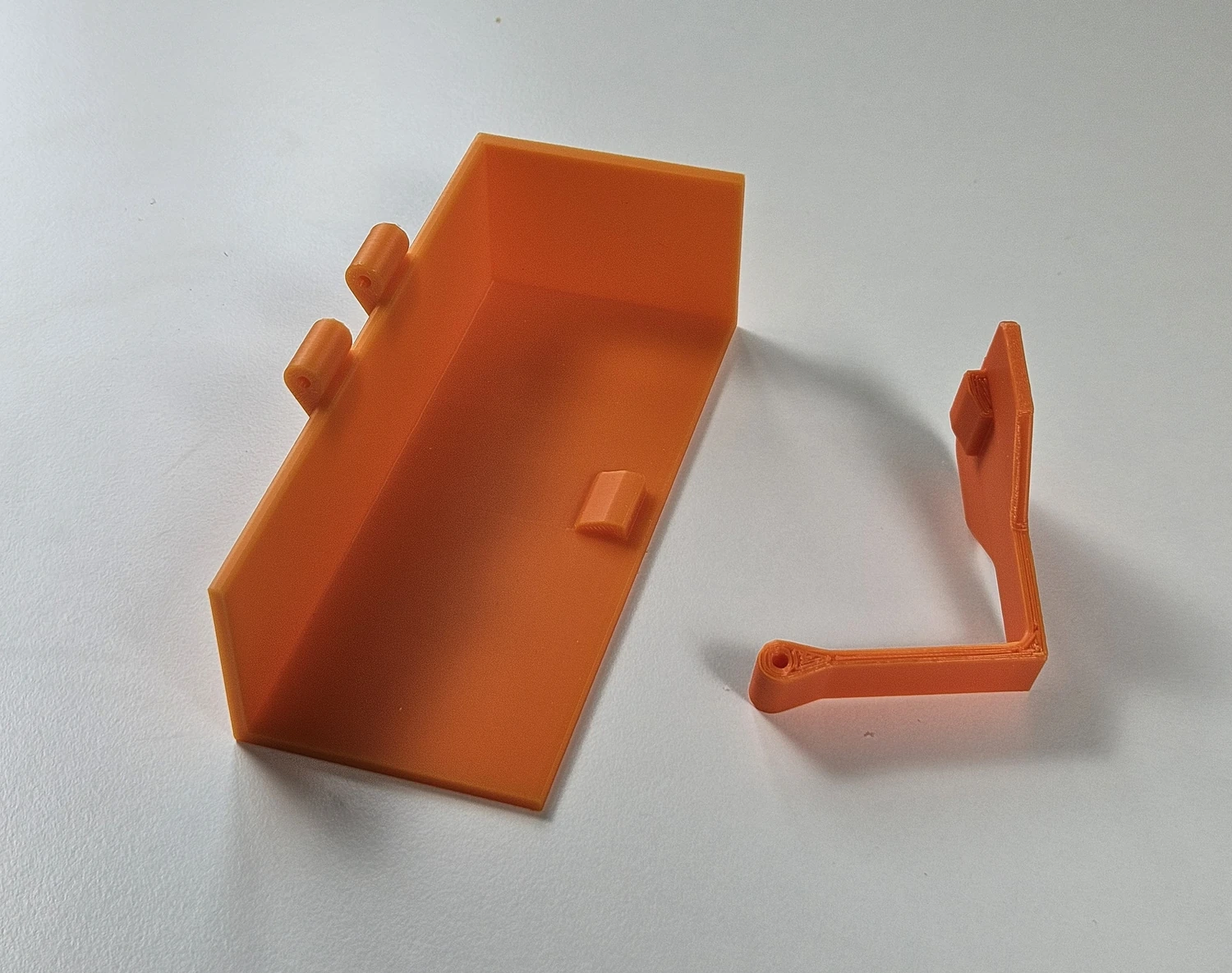
The original conversation did not explicitly cover hardware, but I chose to complete the tool as a fully working mechanism rather than sending the client loose parts. A pair of snug-fitting bolts was used as the central pivot so the tool arrived ready to use immediately.
Result
The finished removal aid was produced in 1 day and dispatched the next day. For £12, the client received a printed, cleaned, assembled and packaged mechanism rather than just a raw set of printed components.
That makes this a strong small-scale portfolio example. It shows how 3D printing can solve specific ergonomic problems that are too niche for mainstream products, while still delivering something affordable, practical and ready for everyday use.
Related: FDM 3D Printing, PLA, Projects & examples, Get a Quote.
Related
FDM 3D Printing
See build size, material choices and common functional use cases.
PLA
A clear guide to one of the most common FDM materials.
Projects & examples
Browse more real-world projects across FDM, resin and batch production.
Get a Quote
Send your file or brief for an exact price and lead time.
Ready to print?
Send your file (or your idea) and we’ll reply fast with options and a clear quote.