

3D printing case study
Samus Aran statue: a cleaner FDM print in three parts
A large character statue started as a customer-supplied STL. After an unsuccessful attempt to print it in one piece, we separated the design into three components, improved the support strategy and assembled the finished print for delivery.
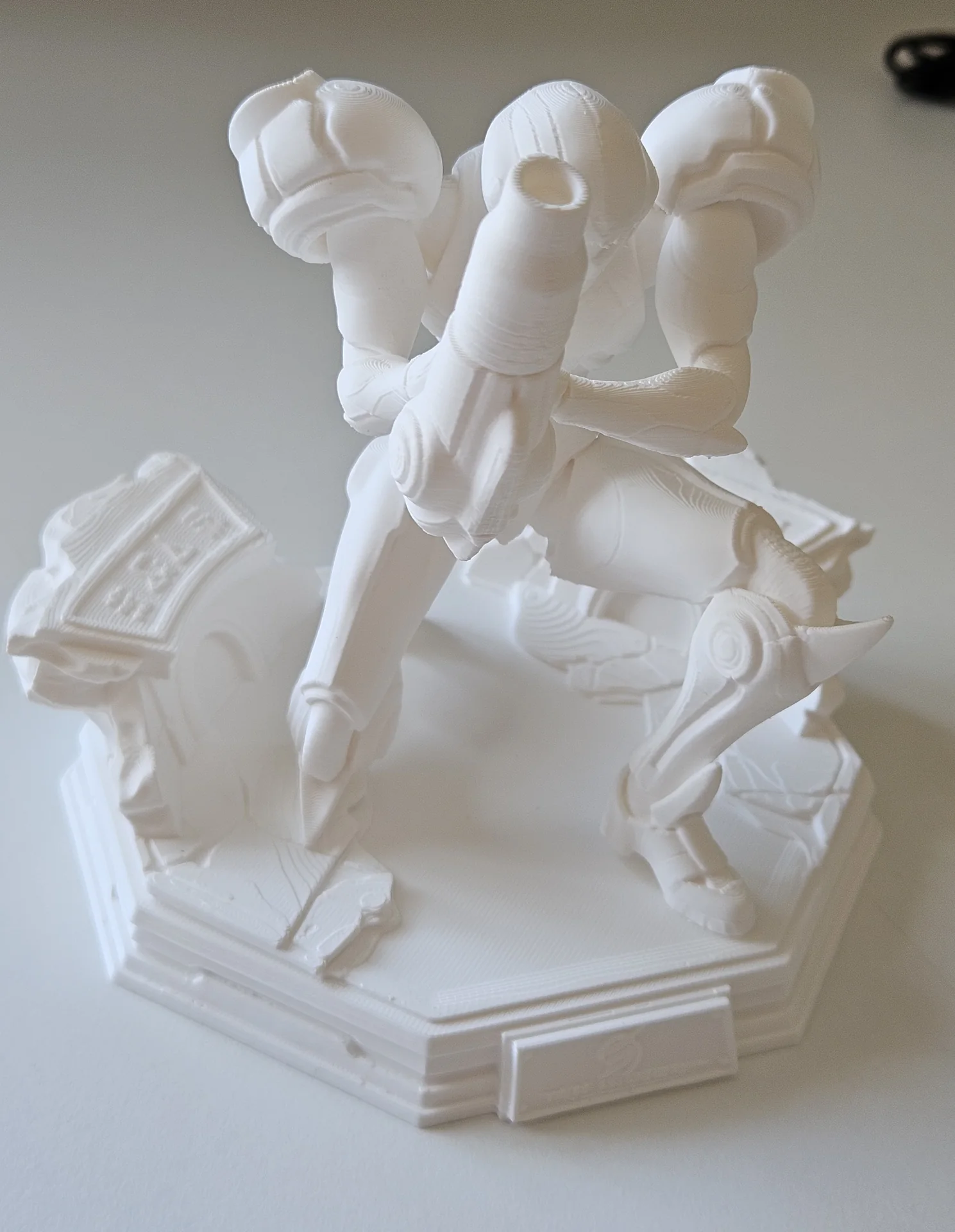
The finished statue appears to depict Samus Aran from Metroid, identified visually from the armour and arm cannon. The customer supplied the STL; our work covered print preparation, production, cleanup and assembly.
Project snapshot
| Item | Details |
|---|---|
| Starting point | Customer-supplied STL model |
| Approximate size | Around 18 cm tall including the base; roughly 18 cm across |
| Material | White SUNLU PLA+ |
| Printer | Bambu Lab P2S |
| Print settings | 0.4 mm nozzle, 0.12 mm layer height |
| Revised construction | Main base, raised scenic section and character printed separately |
| Printing time | Approximately 14 hours for the successful set of components |
| Finishing | Minor string cleanup and superglue assembly; supplied unpainted |
Choosing FDM for the requested size
The client initially considered resin printing. For the requested size, that route would have been considerably more expensive and would have required a large resin printer. We proposed fine-layer FDM printing as a more practical option for this commission.
White PLA+ was used with a 0.4 mm nozzle and 0.12 mm layers. The aim was a detailed physical model that the client could finish themselves, with particular attention to the armour, posed limbs and decorative base.
The first attempt: too much to support in one piece
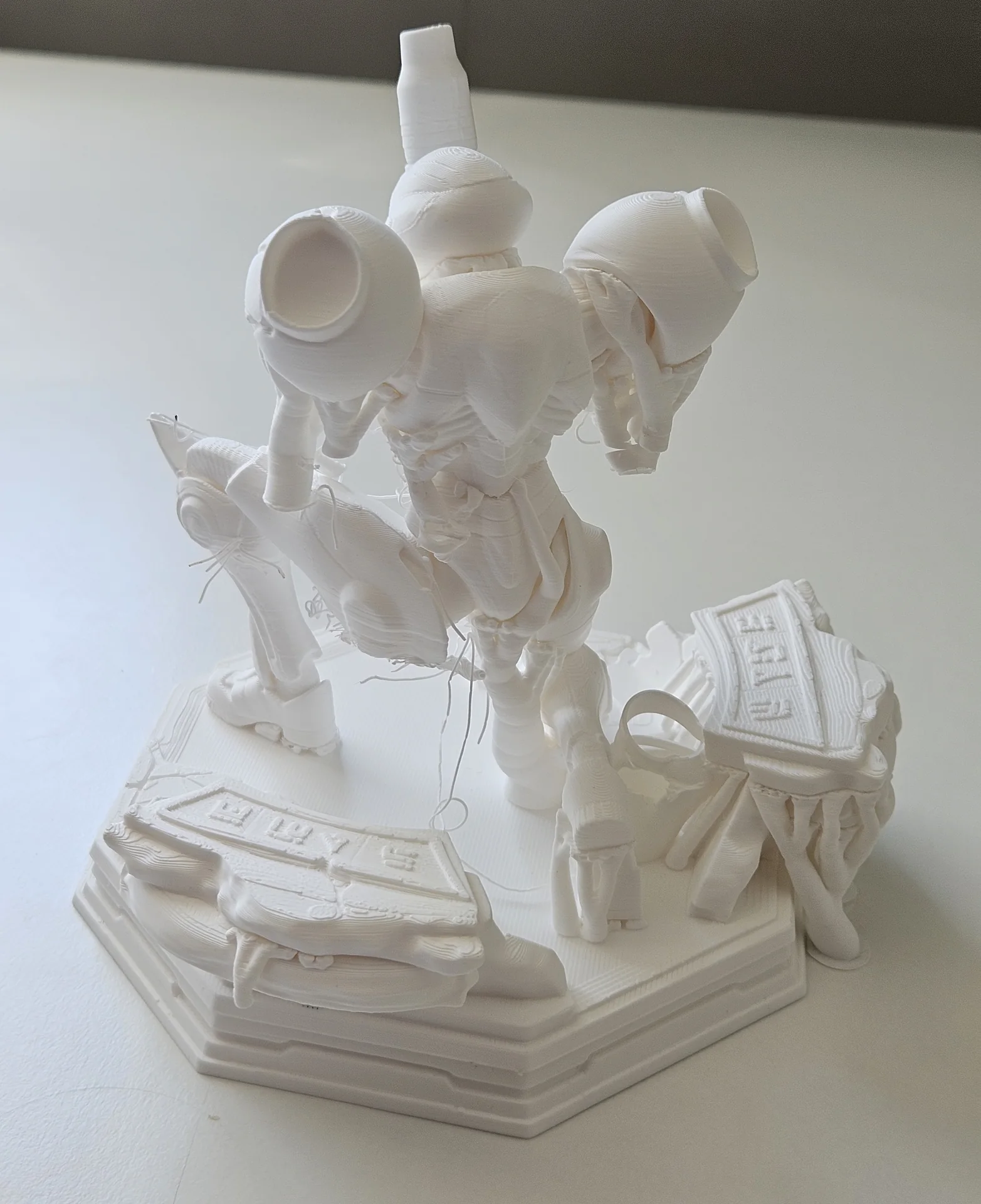
The initial attempt printed the statue as a single object and was unsuccessful. The difficult areas were the inclined surfaces and small features within the pose, including parts of the arms, legs and the area beneath the head. These created awkward support requirements between different parts of the model.
The failed print shows loose filament and poor supported areas. It made clear that the preparation needed to change before another attempt.
Separating the model into three components
We split the supplied model into the main base, a raised scenic section and the character itself. Separating the decorative relief from the base made its overhangs easier to manage, while printing the figure independently reduced the need for supports running from one visible part of the model to another.
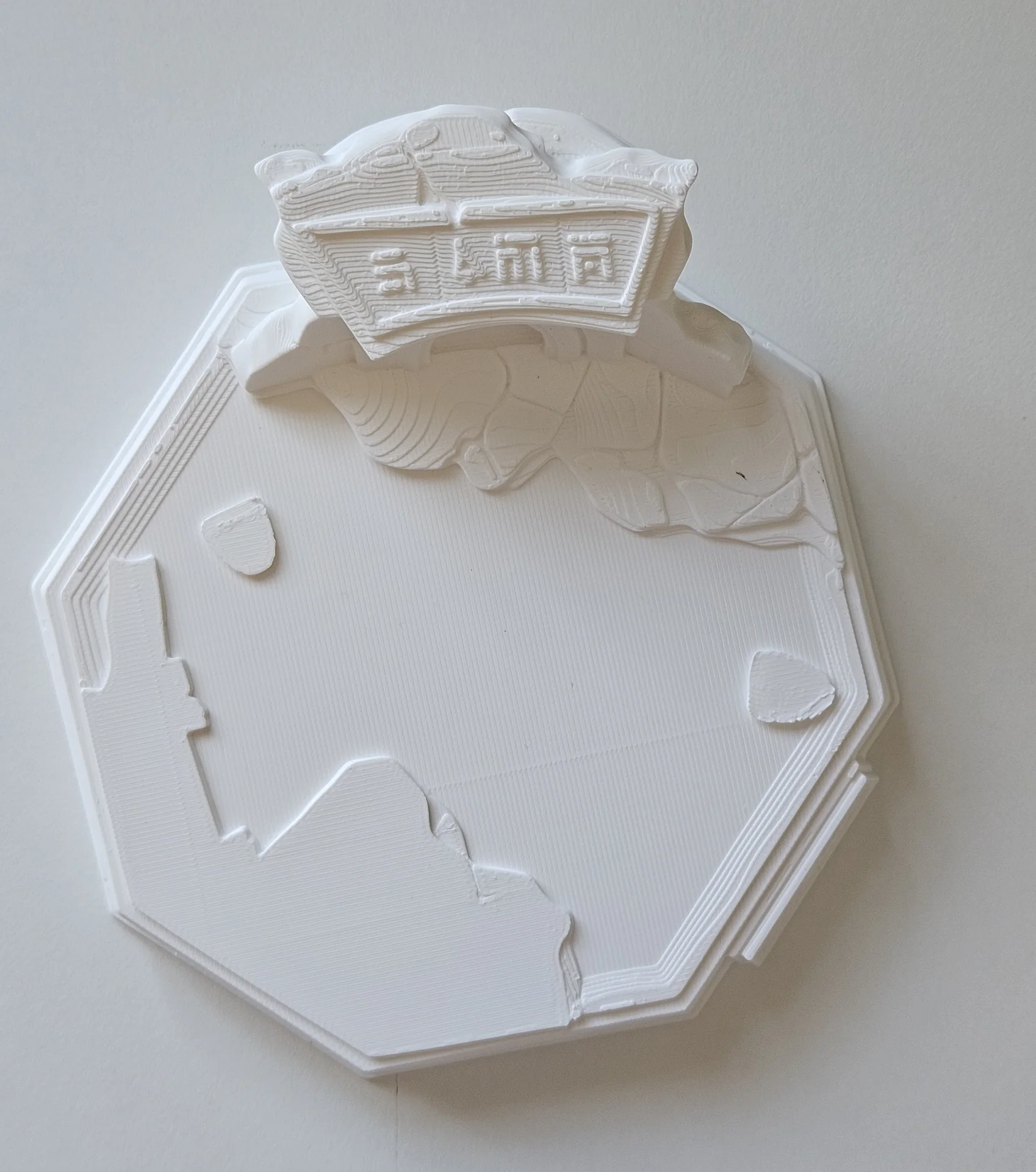
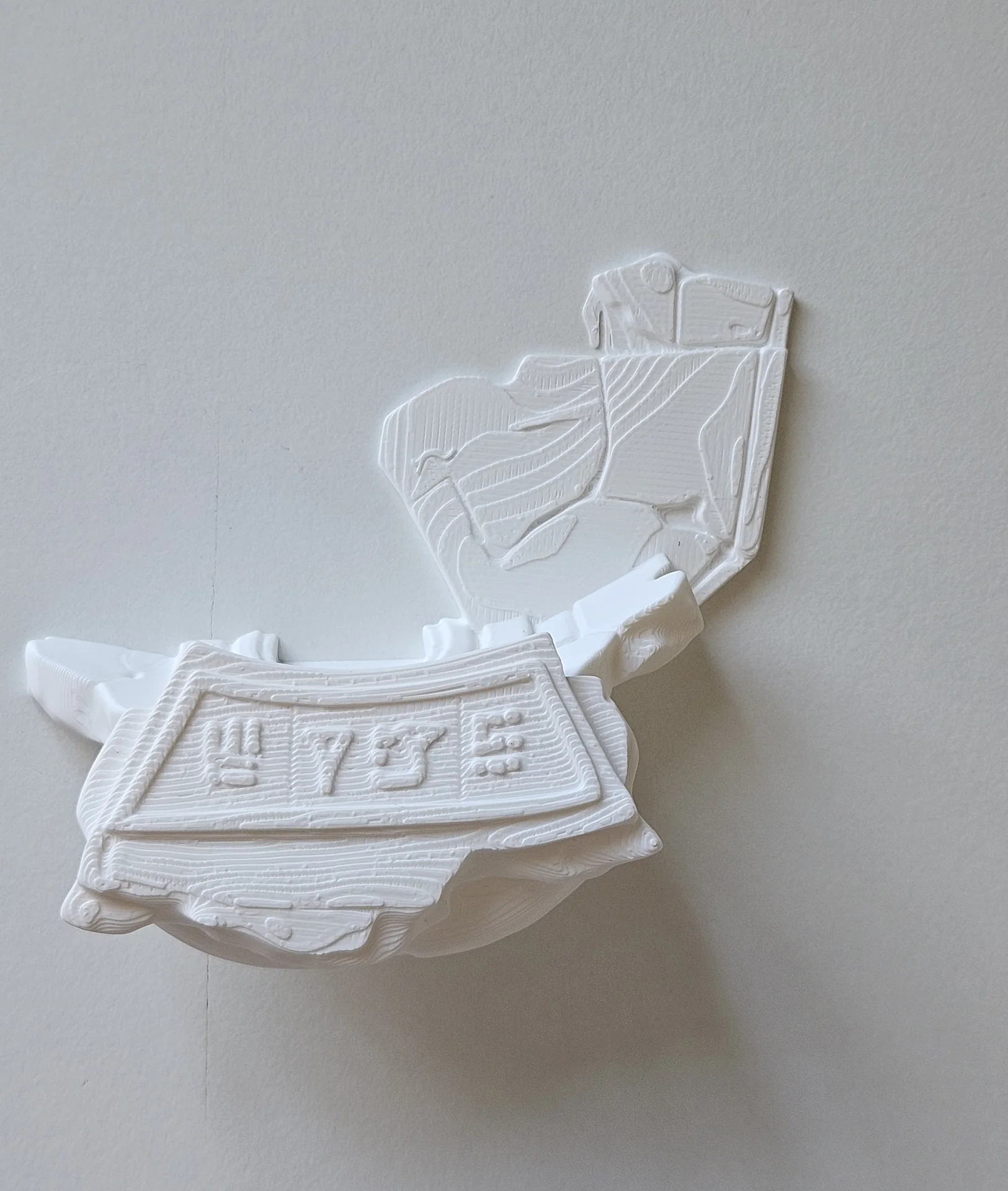
This change improved the overall print quality on the second attempt. It also allowed the successful components to be cleaned up individually before the model was brought together as a single display piece.
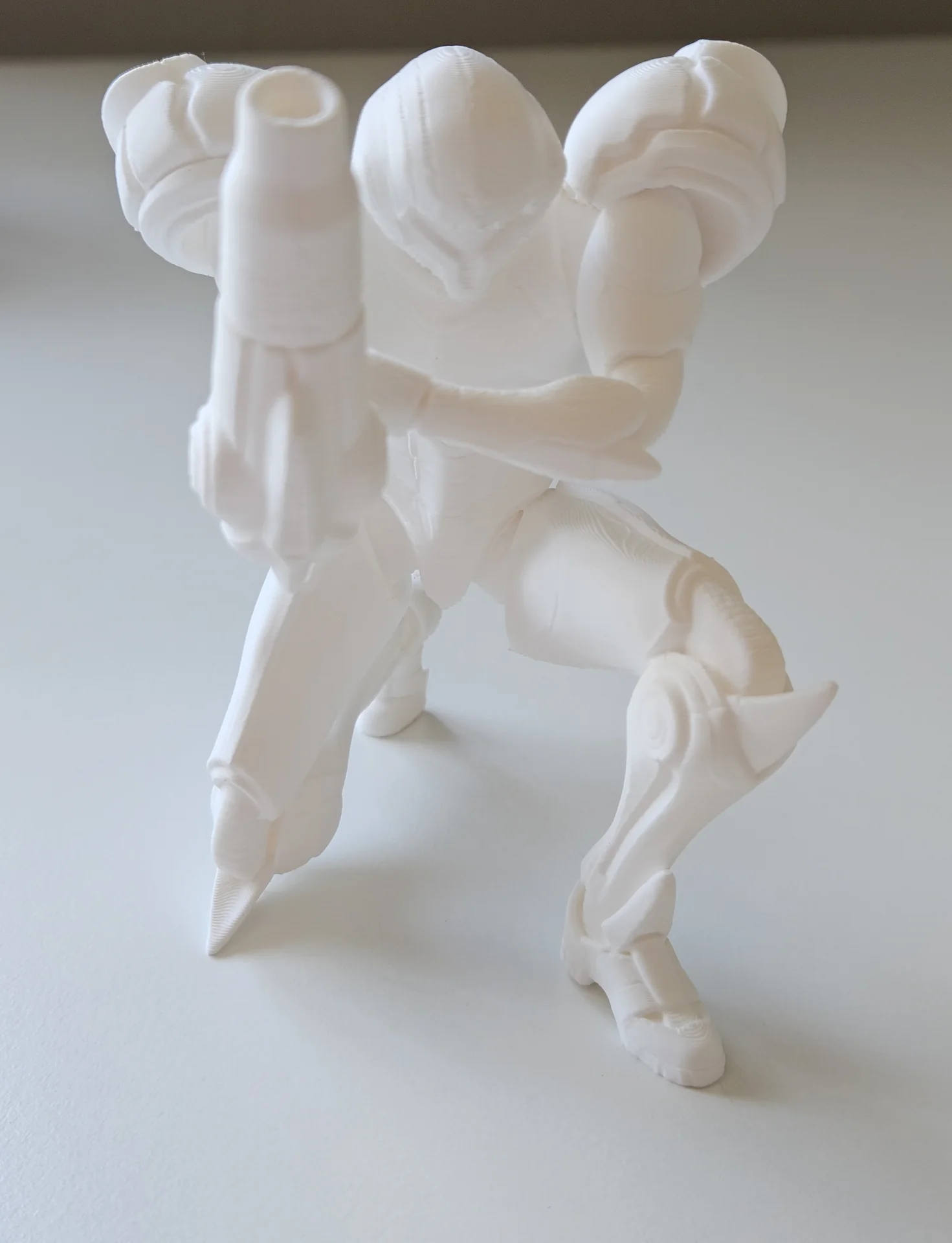
Light cleanup, assembly and delivery
The successful components took approximately 14 hours to print in total. Post-processing was limited: a brief heat cleanup removed fine PLA hairs, and the three components were bonded with superglue.
There was no painting or extensive surface finishing on our side. The assembled white model was supplied for the client to finish; we do not have photographs of any later paintwork. The close views show the actual FDM surface and detail at handover.
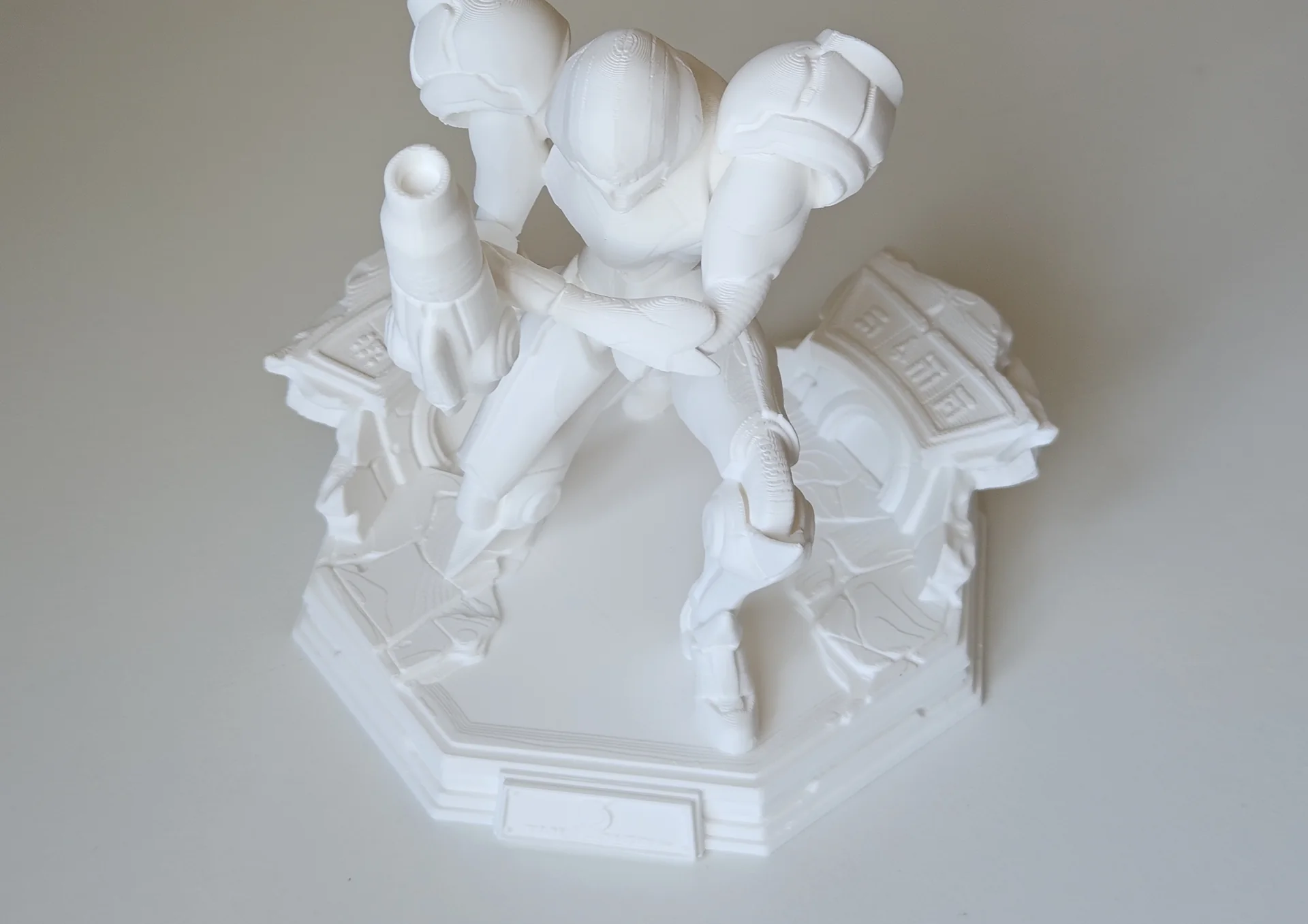
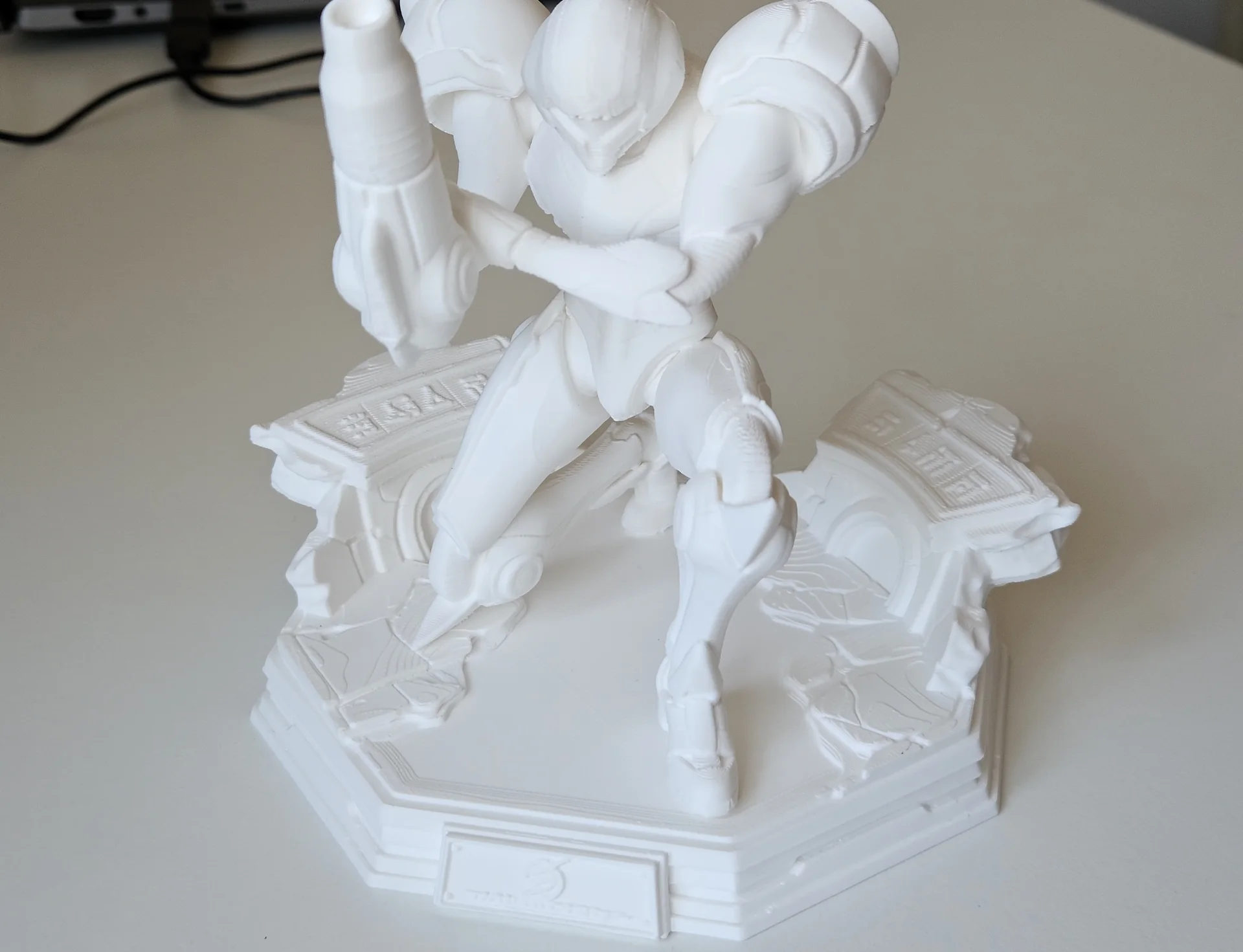
The completed statue was packed securely in a box with protective padding and dispatched to the customer. The key improvement came from changing how the model was divided for printing: three manageable components produced a better result than the original one-piece attempt.
Have a model you would like printed?
Send the STL, the intended finished size and whether you need separate components or an assembled model. Knowing how you plan to finish the piece helps us discuss print preparation and the appropriate process.
Explore our FDM printing service, compare resin printing, or request a quote for your model.
Related
FDM 3D Printing
See build size, material choices and common functional use cases.
PLA
A clear guide to one of the most common FDM materials.
Projects & examples
Browse more real-world projects across FDM, resin and batch production.
Get a Quote
Send your file or brief for an exact price and lead time.
Ready to print?
Send your file (or your idea) and we’ll reply fast with options and a clear quote.