Design, prototype & repeat manufacture

Custom 3D Printed Enclosures & Brackets

Make a housing, mount or adapter around the equipment you actually use. We develop practical CAD designs, adapt existing models or print your files — with samples before a batch and assembly support where the project needs it.

No CAD file needed to start a conversation. Already have a file? Request a quote.

Brampton, Huntingdon, Cambridgeshire · UK-wide shipping

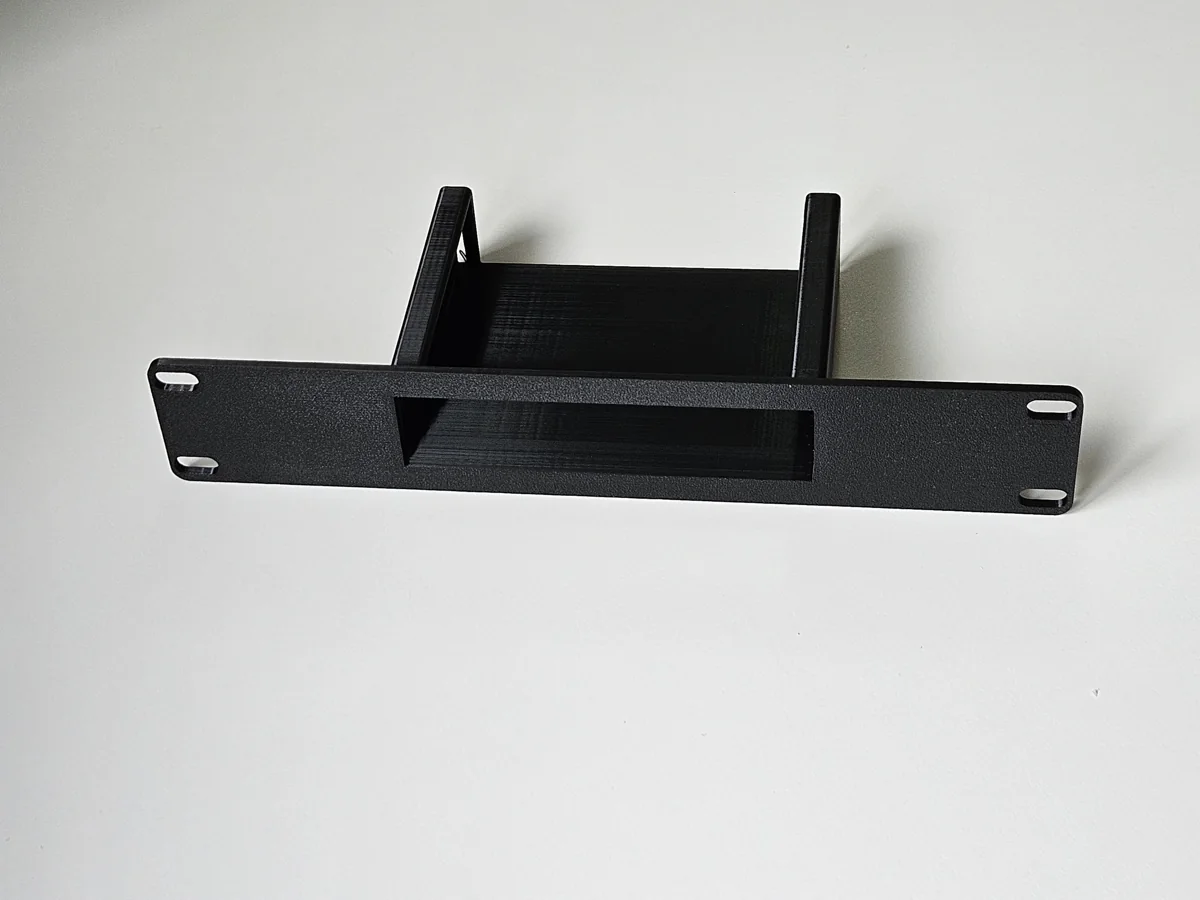
Black custom rack-mount adapter with a fitted device opening and ventilated support basket.
A custom 10-inch rack adapter: geometry shaped around the device, rack opening and access requirements.

Three starting points

Bring a brief, an existing design or a finished file.

We support equipment developers, businesses with repeat part requirements and individual custom projects. The amount of design work depends on what you already have.

01 / DESIGN FROM A BRIEF

Build around your equipment

We establish the dimensions and requirements, then create CAD for the enclosure, bracket or mount. Device openings, cable routes, fixings and assembly access are considered together.

02 / ADAPT A MODEL

Change what needs changing

An existing design may need new openings, different joints or a revised fit. We assess whether to edit the supplied geometry or rebuild the relevant features.

03 / PRINT FROM YOUR FILE

Produce your parts

For a suitable ready model, we can focus on material, print preparation and manufacture. Start with a prototype or sample, then move to the agreed quantity.

Real projects, different scopes

From fitted brackets to an integrated enclosure.

Some jobs need original CAD. Others need a change to a supplied design or consistent printing from a finished model.

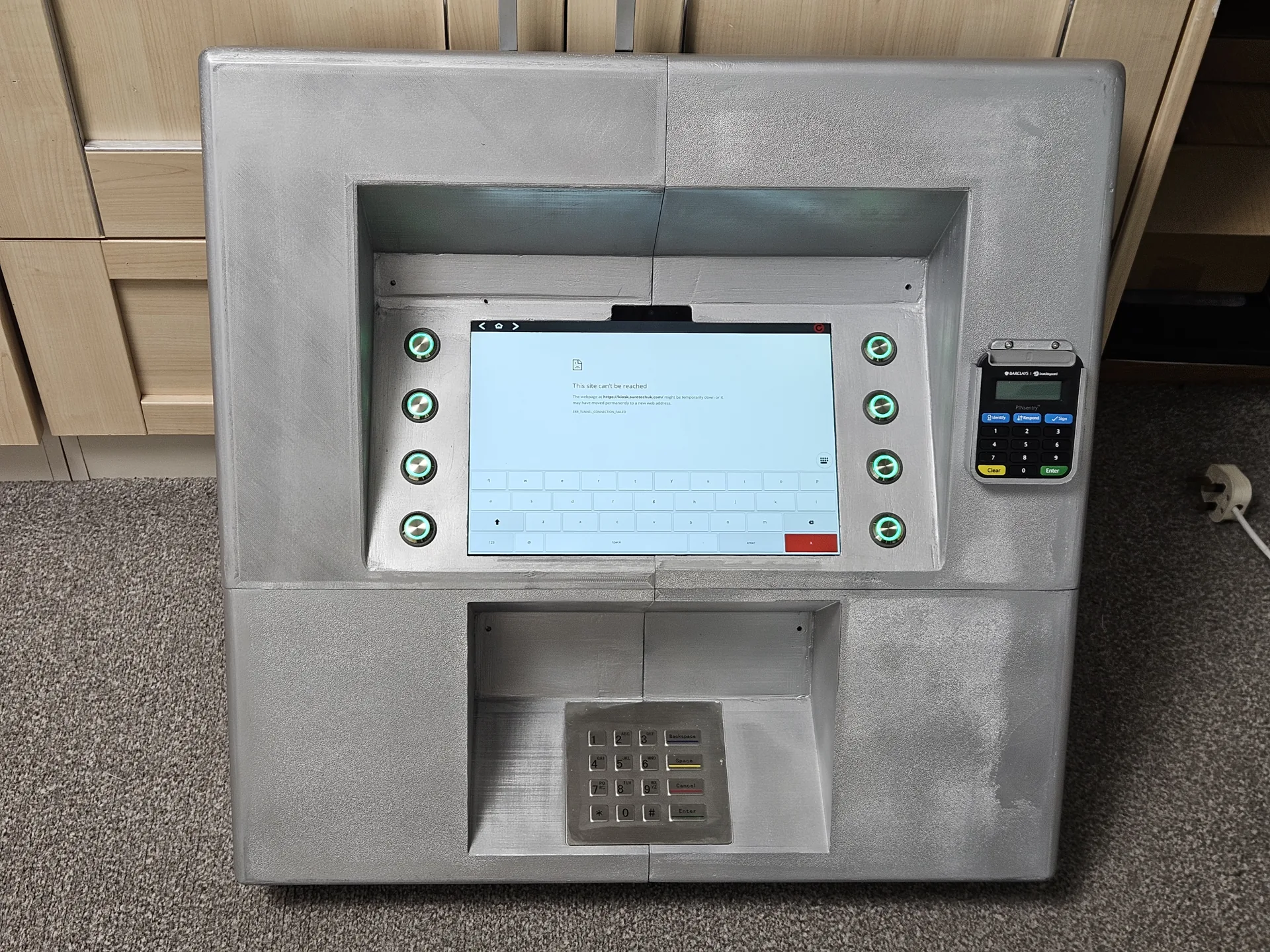
Workshop photograph of the assembled grey kiosk enclosure with tablet, keypad and illuminated buttons.
Workshop photograph of the completed hardware assembly. The project was checked with the client at handover.
Customer model adaptedHardware integration

A tablet kiosk developed into a working assembly

A supplied six-part enclosure became a four-section body with revised fixings and component mounts. Small test pieces checked difficult fits before the main parts were printed.

Our work expanded to finishing, assembly, wiring and firmware for eight illuminated USB controls. The client's separate developer handled the tablet application.

The tablet and controls were checked with the client at handover.

Explore the kiosk build
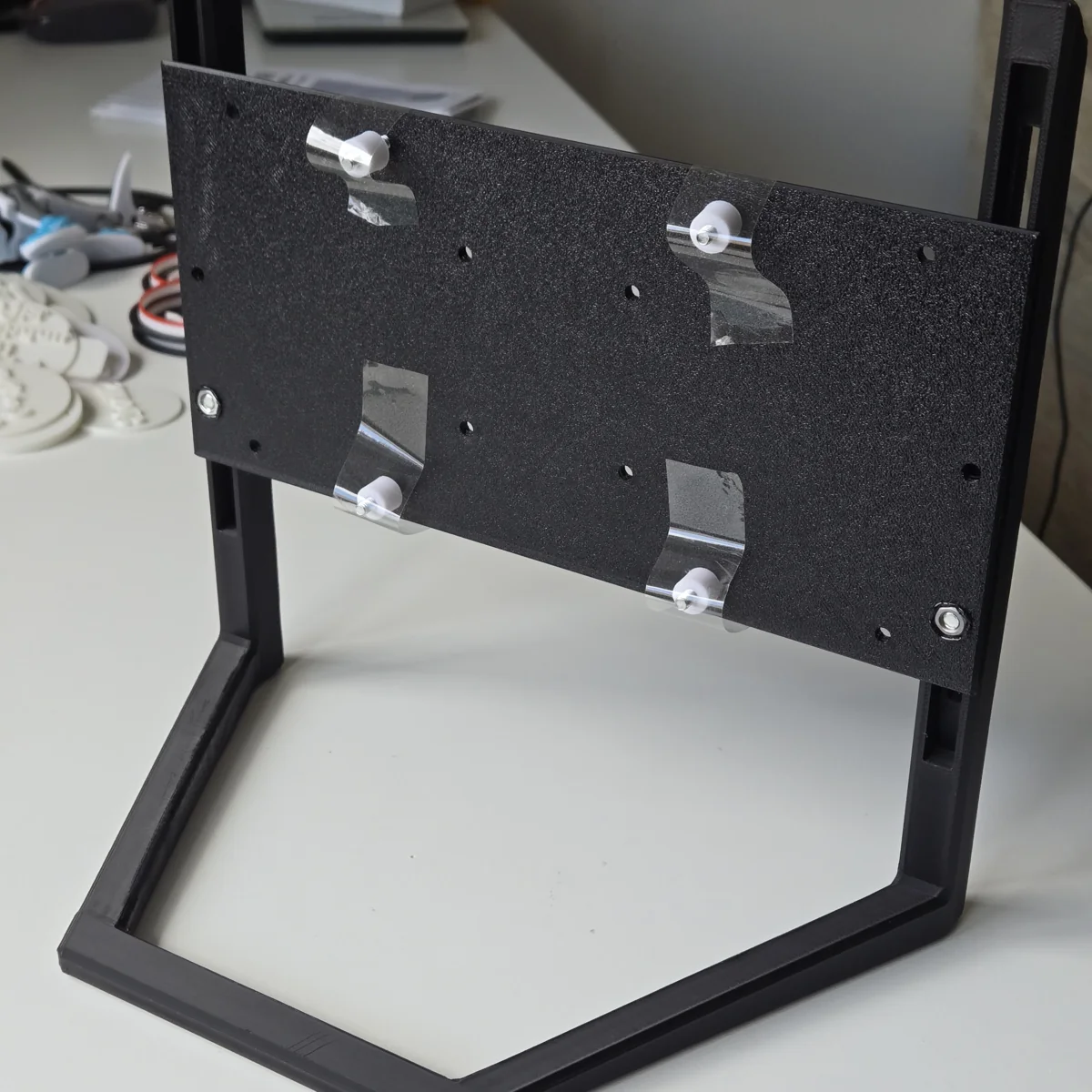
Custom 10-inch network rack adapter with device opening, mounting holes and ventilation.
Designed from dimensions

Device-specific rack adapters

Two CAD designs accommodated different network devices in a 10-inch rack. Client-supplied measurements guided the position, ventilation and connector clearances.

See the rack-adapter project
Printed adjustable monitor handle assembled with a mounting plate and metal fasteners.
Original CAD design

An adjustable monitor handle

Pictures and a discussion established how the client wanted to move the monitor. We designed the handle and a bolted mechanism so its length could be adjusted.

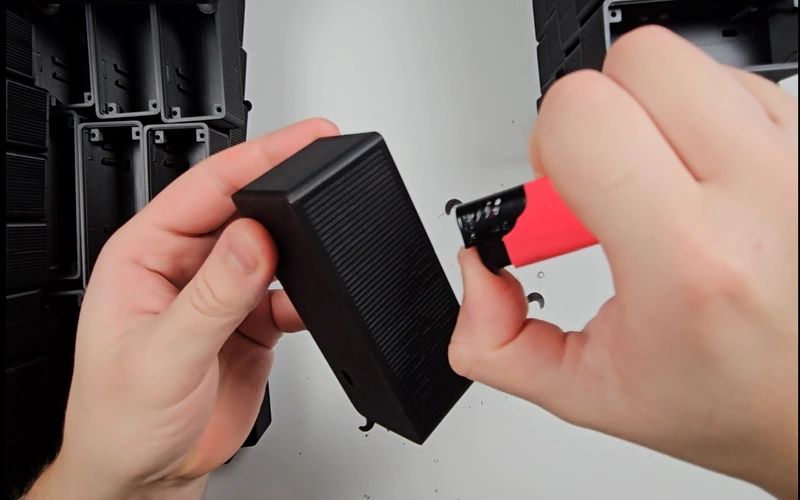
A customer-designed departure-board enclosure during finishing.
Customer model printed

Repeat enclosure production

For Departure Boards UK, the client supplied the enclosure model. Our role was repeated PLA manufacture, checks, finishing and packing, following an initial sample stage.

See the enclosure batch

From sample to batch

Check the details while they are easy to change.

A full enclosure is not always the first useful print. A small section can test a connector opening, mounting point or joint before committing to a larger body.

  1. Define the job

    Share the equipment, available files, use conditions and quantity. We establish what needs designing and what is already resolved.

  2. Review the design

    Agree mounting, clearances, fixings and material. For CAD work, drawings or rendered views help confirm the proposed geometry.

  3. Test the fit

    Use a trial piece or prototype to assess the important features. For a batch, review a sample in the proposed material before approval.

  4. Make and assemble

    Produce the agreed parts, with finishing and assembly where specified. Required checks and delivery arrangements form part of the quote.

Have a repeat production requirement?

Tell us about the first order and expected reorders. Once the design and sample are agreed, manufacture can focus on the defined part specification. See batch & commercial orders.

A useful project brief

Tell us how it needs to fit and work.

You do not need to choose a plastic before getting in touch. We discuss the use conditions and practical trade-offs before recommending a material.

Prototype work can also identify when printing is unsuitable. Our three-version decorating-tool study ended with a decision against production because the risk of small ribs breaking remained unresolved.

  • Equipment and spaceDevice models, available dimensions and any drawings or files.
  • Mounting and accessFixing points, connectors, cable clearance and how the assembly opens.
  • Use conditionsLoad, temperature, sunlight, moisture, chemicals and appearance.
  • Quantity and scopeA prototype, a batch or repeat supply; any finishing, hardware or firmware required.

Before you enquire

Useful things to know

Each job starts with its intended use, the information available and the quantity you need.

Can you design an enclosure from a sketch or explanation?

Yes, for suitable functional parts. Photos, a sketch and a description can start the discussion. We then establish the equipment dimensions, mounting points, clearances and access needed before agreeing the CAD and prototype work.

Can you just print a model we already have?

Yes. Design work is only needed if the model or requirements call for it. We review the supplied files, discuss material, quantity and critical dimensions, then quote for printing. A sample is recommended before a larger order.

Can you modify an existing model?

We assess the file and changes required. An editable CAD model or STEP file can help; substantial changes to an STL may require rebuilding geometry. We agree the approach before starting.

Do you offer assembly and electronics integration?

These can be scoped into suitable projects. Previous work has included mechanical assembly, soldered wiring, illuminated buttons and custom microcontroller firmware. Tell us which hardware and software are already provided so the responsibilities and checks are clear.

How accurate will the part be?

Critical dimensions and fits are discussed for the particular design, material and printer. We can tune the print process and make trial parts to assess them. There is no single tolerance promise covering every geometry; identify the features that matter before we quote.

How are prototypes, changes and CAD files handled?

The quote sets out the expected development and print work. We discuss further changes if requirements move beyond that scope. Printed parts are the usual deliverable; STL, STEP or Fusion project exports can be agreed separately.

An idea, a model or a repeat order

Tell us what your part needs to do.

Describe the equipment, how it will mount or assemble, and the quantity you need. Send a brief to start the discussion, or use the quote form if you already have files and specifications.

Start with your name, email and a short message. Add photos, drawings or files if you have them; we can ask for the details next.